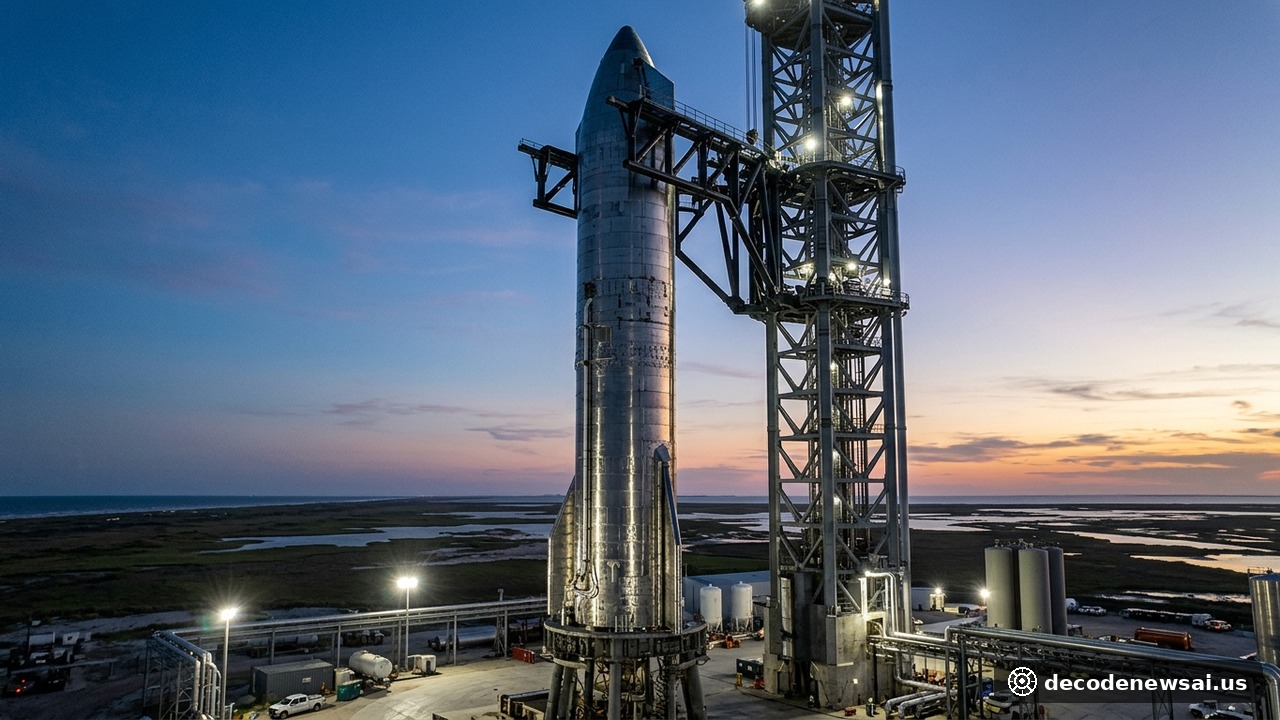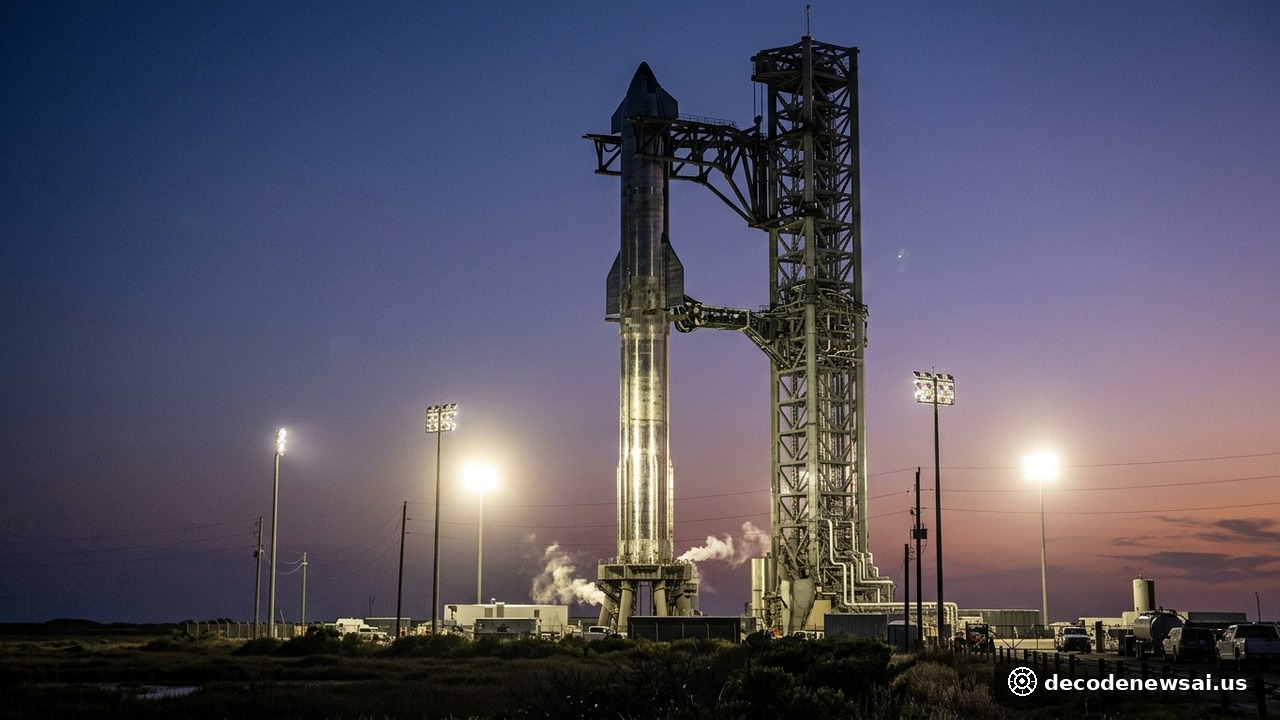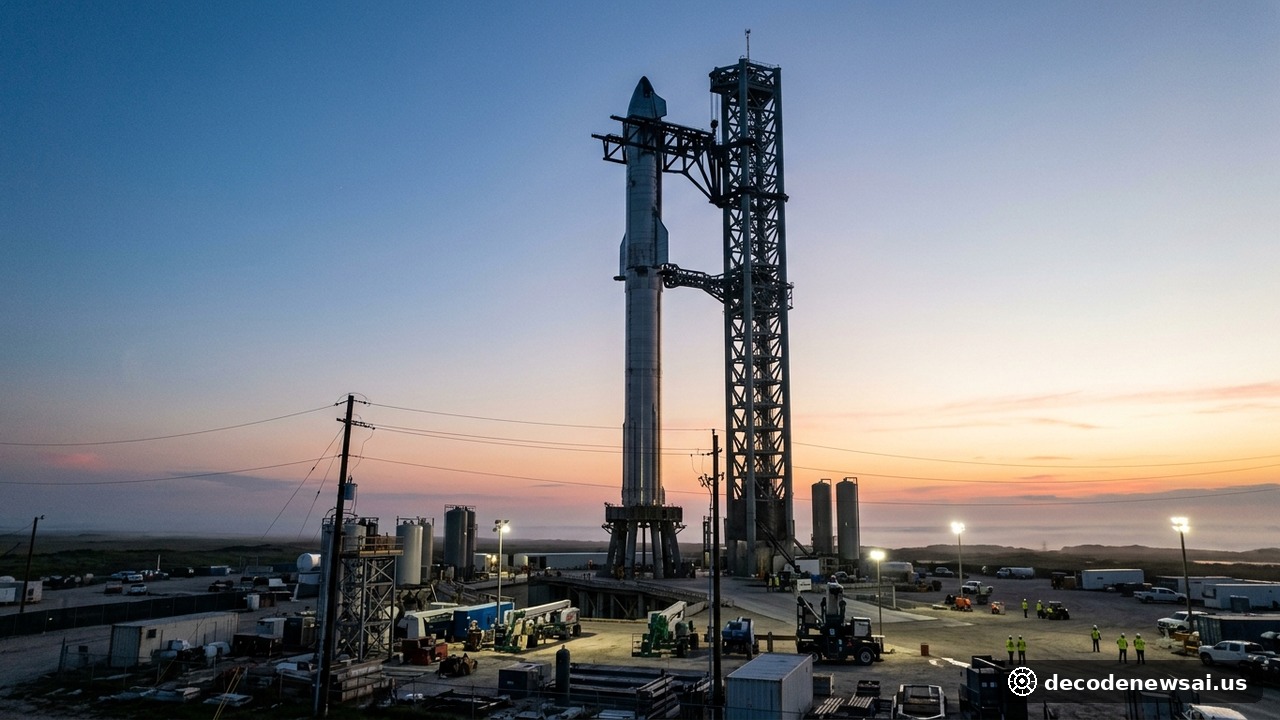
SpaceX and the Federal Aviation Administration concluded the formal Flight Readiness Review for Starship Flight 15 on November 11 at Starbase in Boca Chica, Texas. Regulatory officials approved safety assessments clearing the fully stacked 121-meter vehicle for an upcoming orbital launch attempt. Flight operations could commence within a 48-hour launch window. The scheduled flight profile attempts a dual mechanical catch of the Super Heavy booster and the Starship second stage utilizing ground launch tower arms. Ground teams concluded cryogenic propellant loading tests.
The stainless-steel launch stack stands assembled upon Orbital Launch Mount A following successful static-fire calibrations. Bill Gerstenmaier, Vice President of Build and Flight Reliability at SpaceX, stated during a press conference reported by Space.com and Aviation Week. Technicians completed structural upgrades to the hydraulic mechanical catch arms across the secondary Orbital Launch Pad B. Ground crews also installed reinforced ceramic thermal protection tiles across Starship's windward hull to withstand hypersonic atmospheric reentry friction. Thermal protection systems completed certification.
Under authorized flight trajectories, the Super Heavy booster will separate following hot-stage staging at roughly 2 minutes and 40 seconds post-liftoff. The booster will execute a boostback burn, decelerating toward Starbase for a mechanical capture by Tower A's robotic arms. The Starship upper stage will execute orbital insertion before reentering over the Indian Ocean. Aerodynamic flap surfaces will stabilize the spacecraft during peak heating before reigniting Raptor engines to execute a controlled belly-flop landing flip. Upon verifying terminal flight vectors, ground flight directors will transmit autonomous approach commands directing the spacecraft toward Tower B's mechanical catch apparatus. The maneuver requires instantaneous thrust vectoring across central Raptor engines to achieve zero velocity at catch contact.