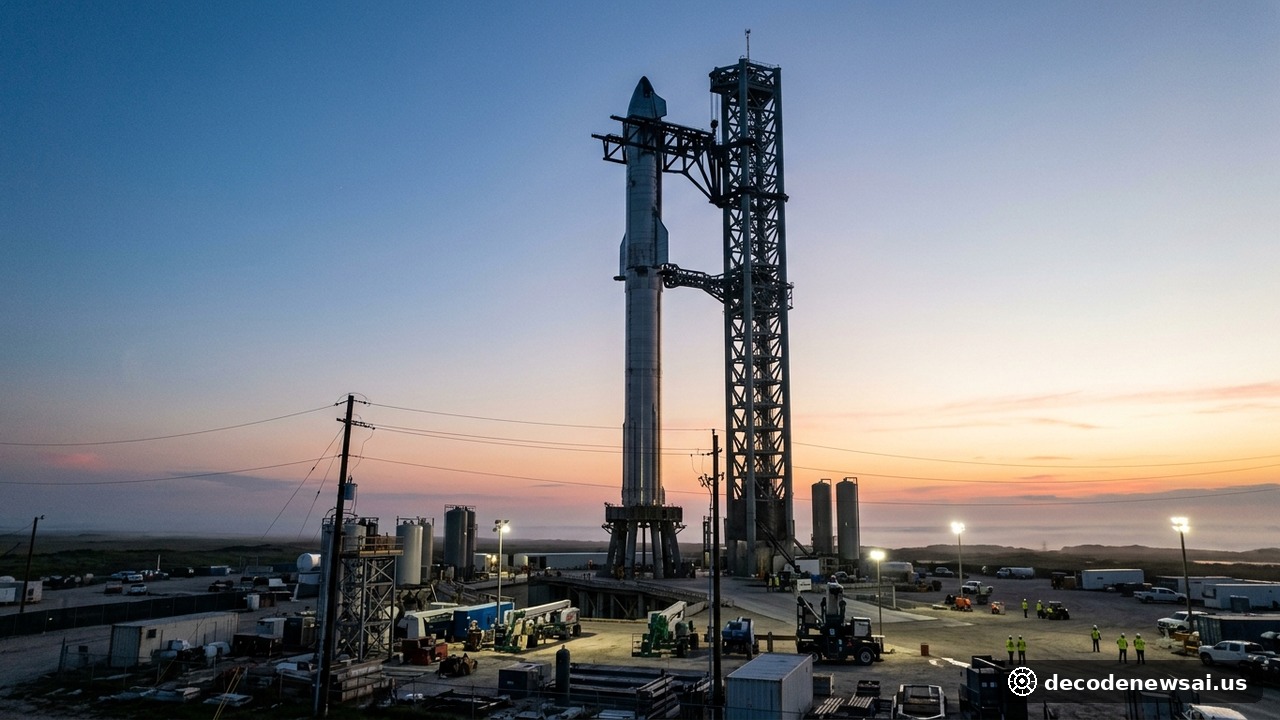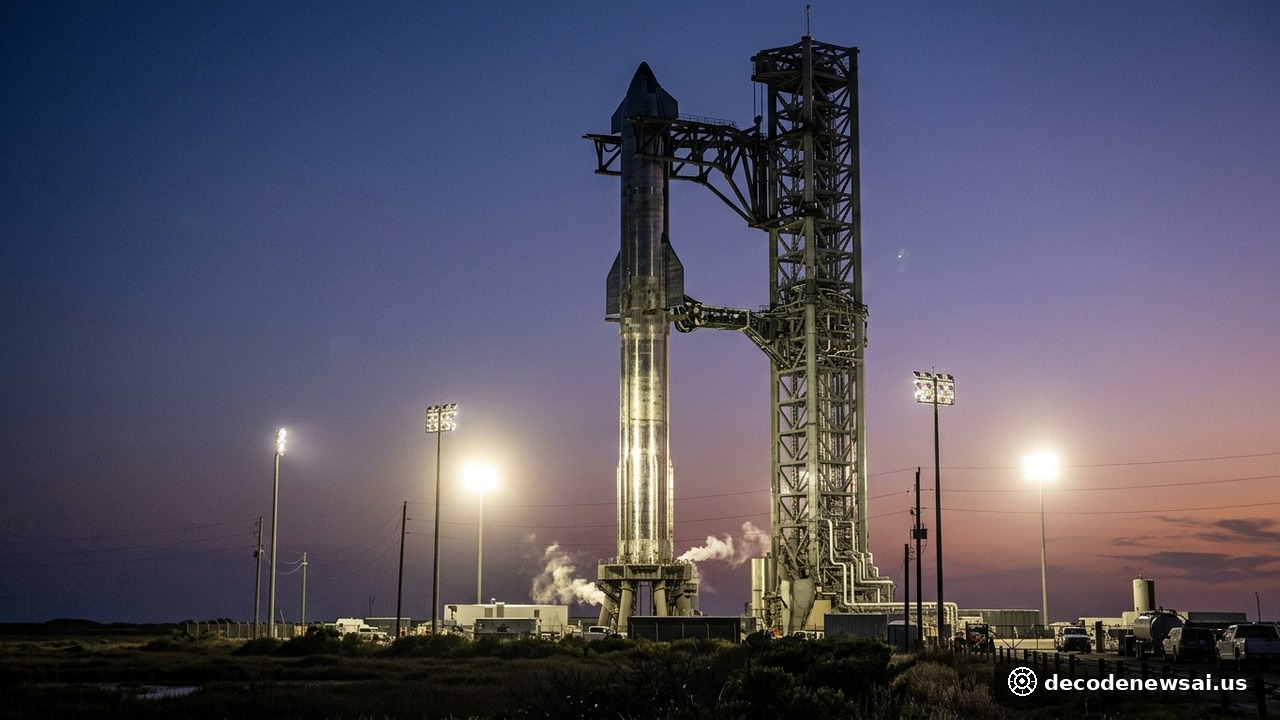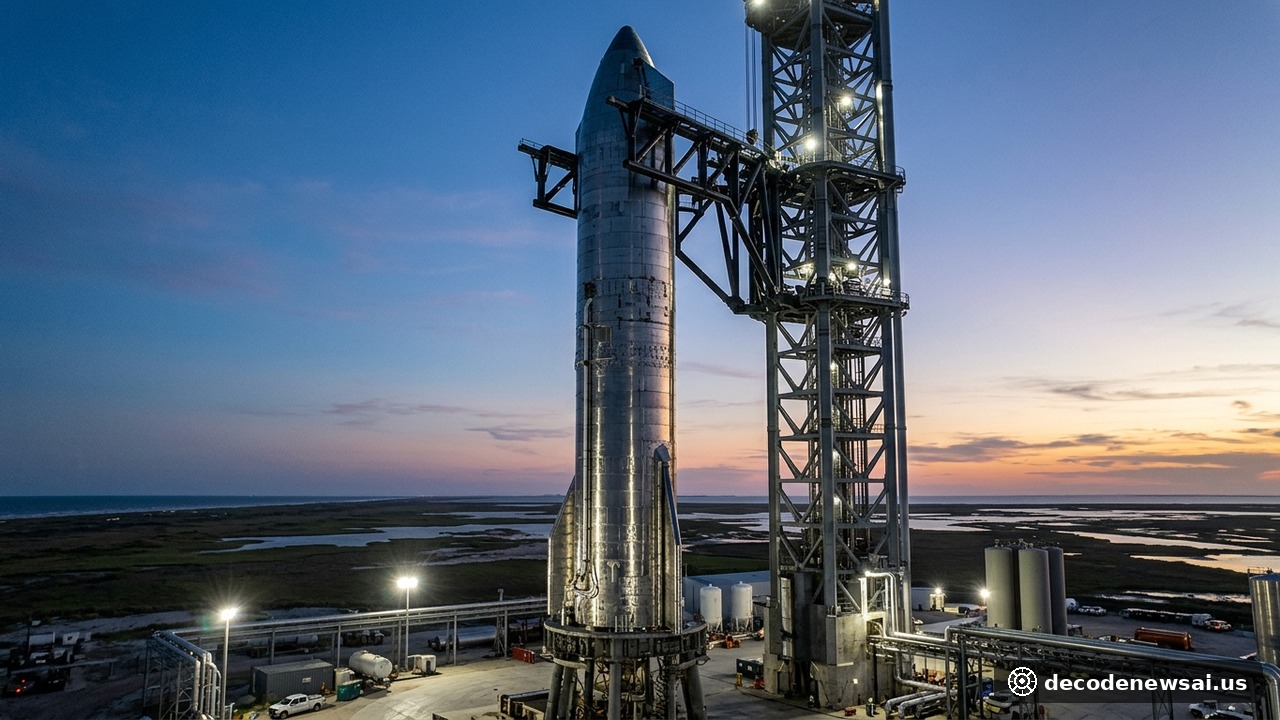
SpaceX announced operational milestones for its Starship flight program on November 13, 2026, confirming the Federal Aviation Administration issued the statutory commercial space launch license authorizing Starship Flight 6. The company finalized the primary flight window for November 19 at 5:00 p.m. Eastern Time from Starbase in Boca Chica, Texas. Flight 6 repeats the Super Heavy booster catch using the orbital launch tower’s mechanical arms and introduces the first in-space relight of a single Raptor vacuum engine during orbital coast.
According to technical mission profiles submitted to the FAA Office of Commercial Space Transportation, Booster 13 and Ship 31 completed structural stack verification and cryogenic propellant loading rehearsals at Orbital Launch Pad A. The booster executes a boostback burn after stage separation to attempt an onshore launch-site catch, while the upper stage flies a suborbital trajectory toward the Indian Ocean. During trans-atmospheric coast, Ship 31 reignites a single center Raptor engine for several seconds, demonstrating the deorbit burn capability required for orbital deployment missions. Senior propulsion engineers reviewed test priorities across vehicle subsystems; directors said Flight 6 targets thermal protection stress testing across Ship 31. SpaceX intentionally removed specific thermal tiles along high-heat transfer corridors to evaluate secondary heat shield materials during peak hypersonic atmospheric reentry.
For the booster catch, SpaceX flight operations programmed autonomous safety criteria. During the landing burn, flight computers continuously assess sensor telemetry across tower catch pins and booster engine manifolds. If telemetry identifies anomalies exceeding strict tolerance margins, the booster diverts toward an offshore soft splashdown in the Gulf of Mexico. Cameron County authorities issued beach and road closure notices spanning November 18 through November 20. The United States Coast Guard published notices to mariners designating maritime safety exclusion zones across the western Gulf of Mexico.