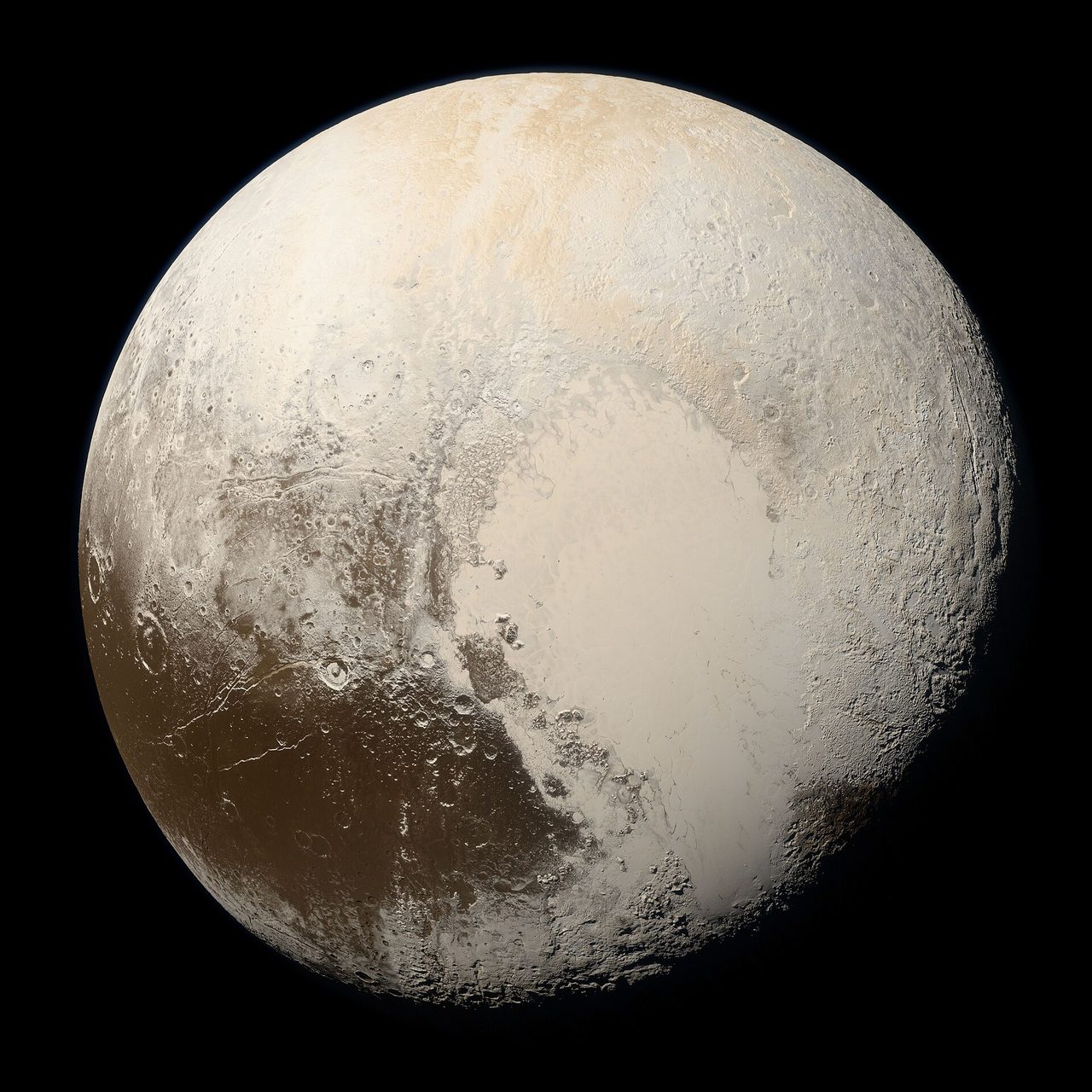
On November 13, 2026, scientific teams operating the NSF-DOE Vera C. Rubin Observatory in Chile announced the detection and orbital confirmation of candidate dwarf planet 2026 ED138; situated beyond Neptune in the classical Kuiper Belt, the distant world represents one of the largest trans-Neptunian objects discovered this decade. The discovery originated from test survey exposures collected between March and June 2026 atop Cerro Pachon utilizing the observatory's 3.2-gigapixel Legacy Survey of Space and Time camera; astronomer Matthew Holman identified the slow-moving planetary body while executing algorithmic searches across high-density image sequences. Archival imaging plates preserved at Harvard University and the Palomar Observatory revealed unambiguous precovery detections dating back to 1937, and this 89-year observation arc allowed orbital dynamicists to calculate planetary orbital parameters with exceptional mathematical certainty; the orbit proved highly stable. Smithsonian Magazine documented the verification history in its comprehensive science dispatch: “The Vera C. Rubin Observatory captured candidate dwarf planet 2026 ED138 in images between March and June, with archival precovery observations extending back to 1937 confirming its distant orbit within the outer solar system.”
Initial radiometric and optical evaluations place 2026 ED138 within the classical Kuiper Belt, orbiting at an average distance exceeding forty astronomical units; spectroscopic brightness profiles indicate a spherical body with a diameter spanning several hundred kilometers; the object satisfies hydrostatic equilibrium criteria defining candidate dwarf planet status; photometric reflectivity measurements suggest a primitive surface composition dominated by volatile methane ice and complex organic tholins; because the object orbits far beyond planetary gravitational disruptions, its surface preserves pristine chemical conditions from the primordial solar nebula.
The International Astronomical Union Minor Planet Center cataloged the body under designated reference 2026 ED138; global space observatories scheduled complementary infrared follow-up campaigns to refine its exact thermal properties. Astrometry specialists employed advanced computational algorithms to link historical photographic detections with modern high-cadence digital exposures; the extended eighty-nine-year orbital baseline enabled dynamicists to model gravitational perturbations with high precision.