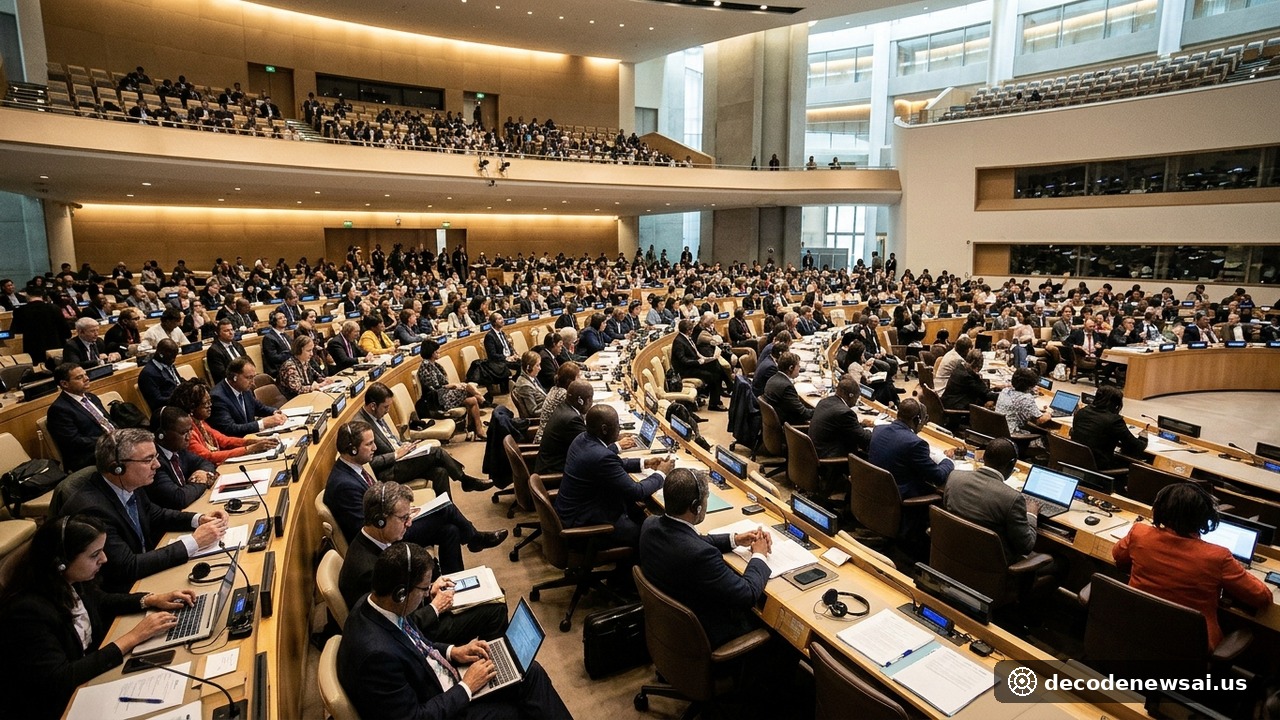
Week one of the COP31 UN climate summit in Antalya, Turkey closed on November 13, 2026, amid deepening friction over funding. Although more than 92,000 delegates registered for the talks, analysis published Friday by Carbon Brief revealed that public climate-finance pledges from developed nations have dropped roughly 70% below 2025 levels. Provisional participant lists also confirmed the United States again declined to send a delegation, joining Israel and Myanmar as no-shows.
Barbados Prime Minister Mia Mottley cited the steep decline while addressing world leaders. "My friends, let us be clear: pledges are not payments. But even the promised pledges are now 70% below previous levels," Mottley said. European Commission climate-finance lead Diana Acconcia acknowledged that tight national budgets across Europe have complicated new commitments. The European Union and developed allies want to broaden discussions to include private capital, development banks, and wealthier emerging economies. By contrast, the G77 and China bloc insisted on focusing strictly on Article 9.1 of the Paris Agreement, which obligates developed nations to supply public resources.
The joint Turkish-Australian presidency is simultaneously championing a pledge to generate 35% of global final energy from electricity by 2035, backed privately by more than 50 nations. Procedural pushback from Russia and other delegations slowed talks on an overarching cover decision; earlier in the week, UN Secretary-General António Guterres told roughly 80 world leaders in Antalya that it was "make or bake time," warning countries cannot expand fossil fuels while claiming 1.5C commitment. China confirmed it will not bid to host COP33. With COP31 running through November 20, negotiators face intense pressure to bridge the financing gap before ministers arrive next week.