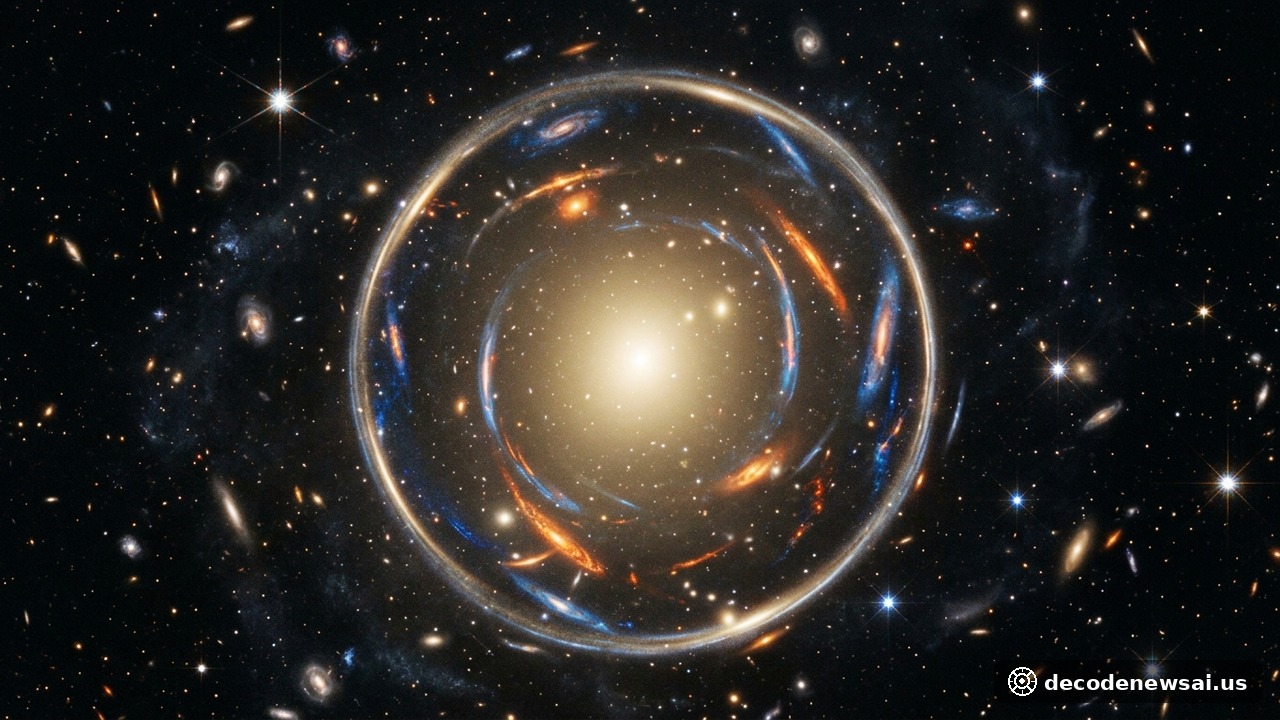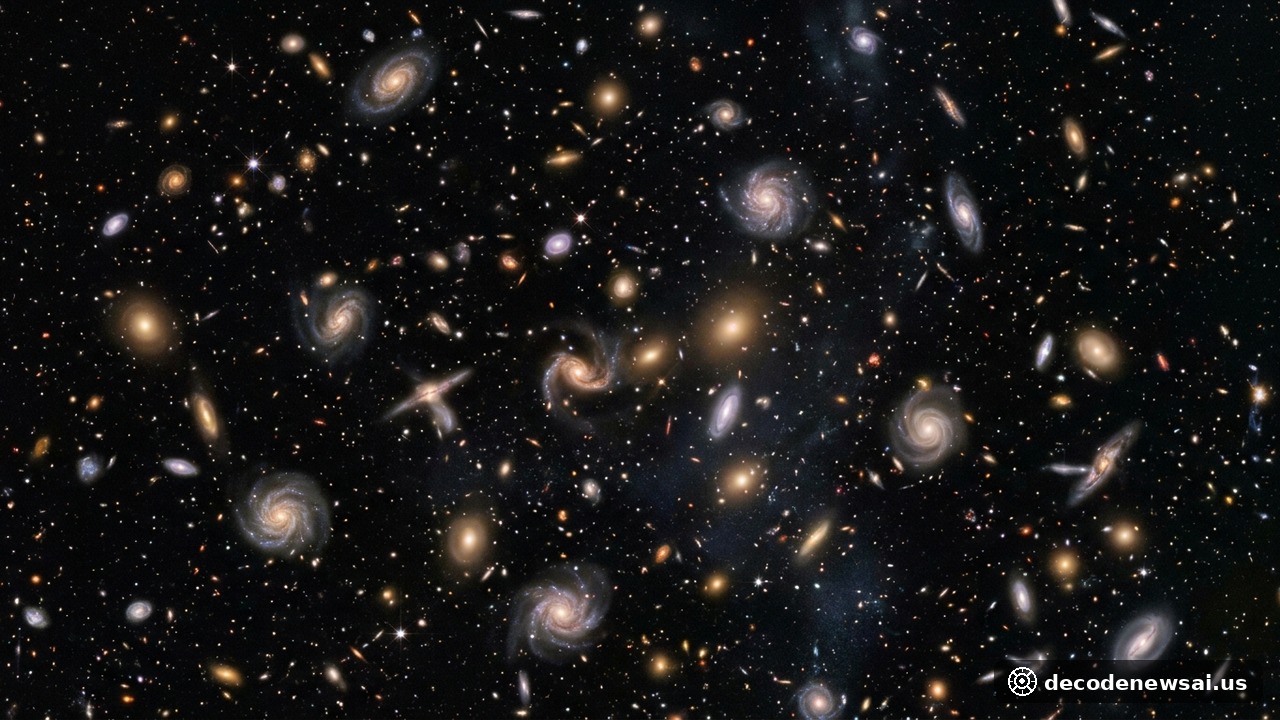
The European Space Agency released its first batch of scientific data from the Euclid space telescope on Thursday. Named DR1-Foundation, the release spans roughly 13 months of observations since Euclid launched in mid-2023 and captures light from more than one billion celestial objects. According to ESA's Thursday release, DR1-Foundation contains over 900 million galaxies, approximately 15,000 strong gravitational lensing candidates, more than 60 million quasar candidates, and spectra from over 160 million cosmic sources. The strong gravitational lens catalogue alone surpasses all previous astronomical surveys combined, aided by machine learning tools and thousands of Zooniverse citizen scientists. Project scientist Valeria Pettorino noted that earlier preliminary releases covered roughly 60 square degrees, whereas the new wide survey spans 1,900 square degrees.
To place galaxies within the three-dimensional cosmic web, Euclid splits starlight into rainbows via spectroscopy using near-infrared detectors provided by NASA. University of Portsmouth researcher Natalie Lines explained that strong lenses allow astronomers to weigh galaxies alongside their unseen dark matter halos. ESA noted that DR1-Foundation represents 14 percent of Euclid's planned total sky coverage. The complete Data Release 1 is scheduled for mid-2027, adding weak gravitational lensing measurements and cluster evolution analyses. More than 2,000 scientists across 300 institutes in 15 European countries, the United States, Canada, and Japan will continue analyzing the public archive.
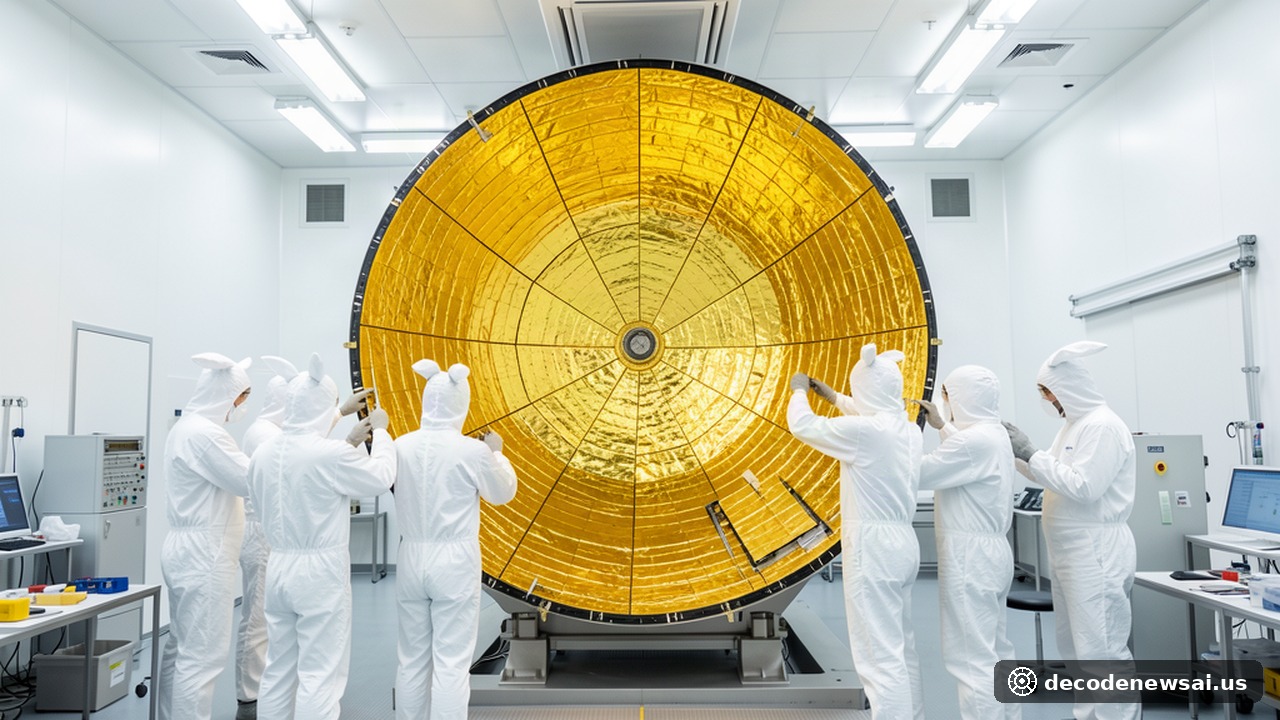
Built by prime contractor Thales Alenia Space alongside Airbus Defence and Space, Euclid operates above Earth's distorting atmosphere to capture deep visible and near-infrared mosaics impossible for ground-based observatories. ESA archive scientist Bruno Altieri noted that storing, visualizing, and sharing catalogues exceeding one billion celestial objects through the Euclid Data Space platform required major engineering coordination. Max-Planck-Gesellschaft researchers highlighted that Euclid's Northern Sky mosaic alone comprises 740 individual exposures covering 367 square degrees.