The National Aeronautics and Space Administration announced a technical milestone for its flagship astrophysics observatory on Friday. Engineering teams at NASA's Goddard Space Flight Center in Greenbelt, Maryland, achieved system-level timing and telemetry synchronization across the Nancy Grace Roman Space Telescope's scientific instruments. The observatory's central command and data handling computer established high-speed synchronicity with onboard science payloads. Orbital integration timelines moved forward smoothly.
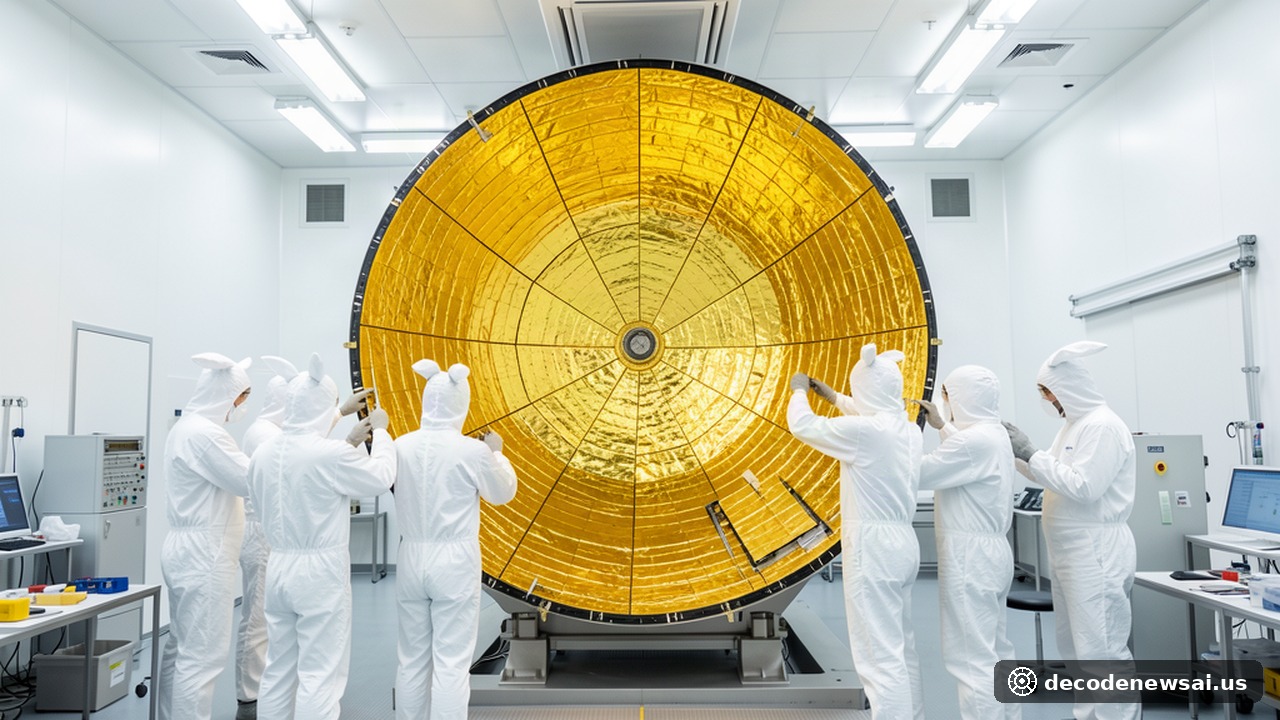
Roman boasts a field of view one hundred times larger than that of the Hubble Space Telescope, demanding picosecond-level instrument clock stability. System integration engineers verified that focal plane detector arrays trigger harmoniously with fine guidance attitude control sensors during simulated high-throughput wide-area sky surveys. System architecture verified flawlessly. According to the official NASA Science mission blog and technical reporting by Space.com on Friday, teams conducted multi-week hardware-in-the-loop tests inside cleanroom test complexes. Project managers stated that engineering teams at Goddard successfully brought Roman's scientific instruments into precise timing synchronization, ensuring seamless simultaneous observations across vast cosmic fields without data latency. The verified compliance eliminated data packet collisions during continuous high-rate survey mode. Mechanical and electrical integration neared completion.
Validation trials tested the flagship three-hundred-megapixel Wide Field Instrument alongside the experimental Coronagraph Instrument designed to image faint exoplanets around nearby stars. Both scientific instruments routed synchronized data streams through the spacecraft's solid-state recorder and high-rate microwave communication links. Robust telemetry links demonstrated full operational redundancy.
Under NASA's baseline mission manifest, the Roman observatory is scheduled for orbital launch aboard a commercial heavy-lift vehicle targeting the Sun-Earth Lagrange Point 2 before May 2027. The mission aims to untangle cosmological questions surrounding dark energy and cosmic expansion dynamics.