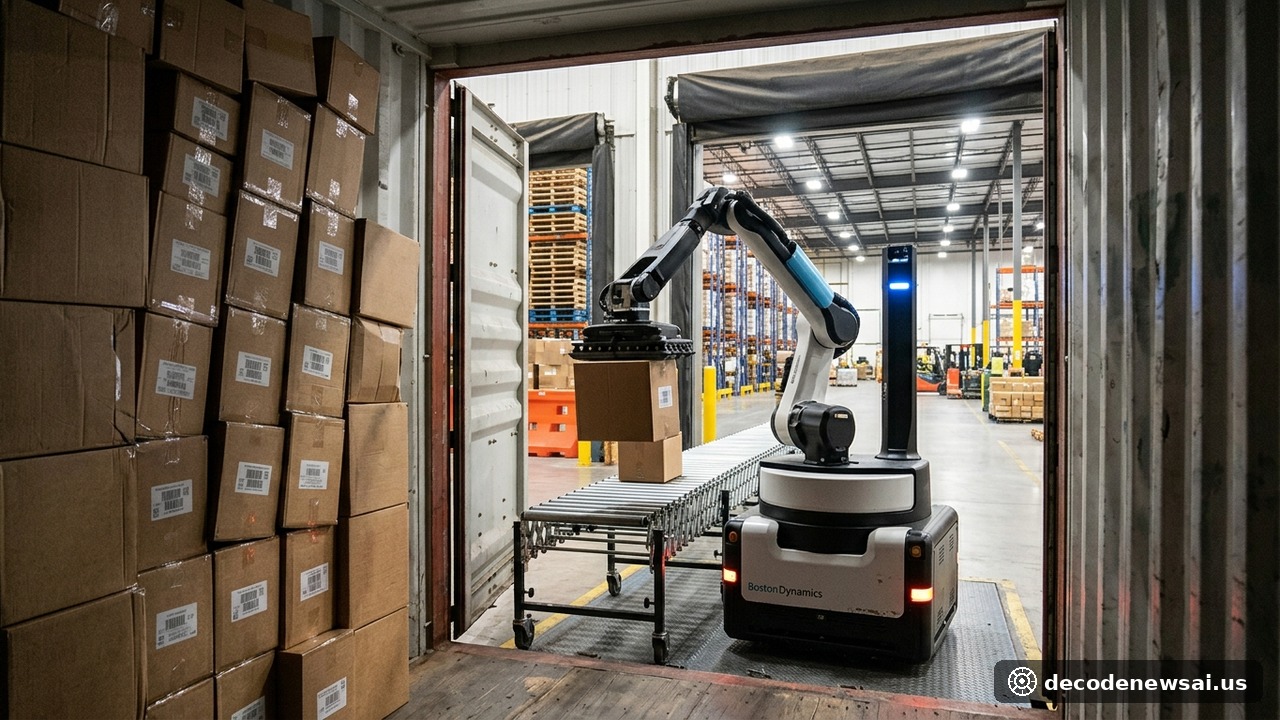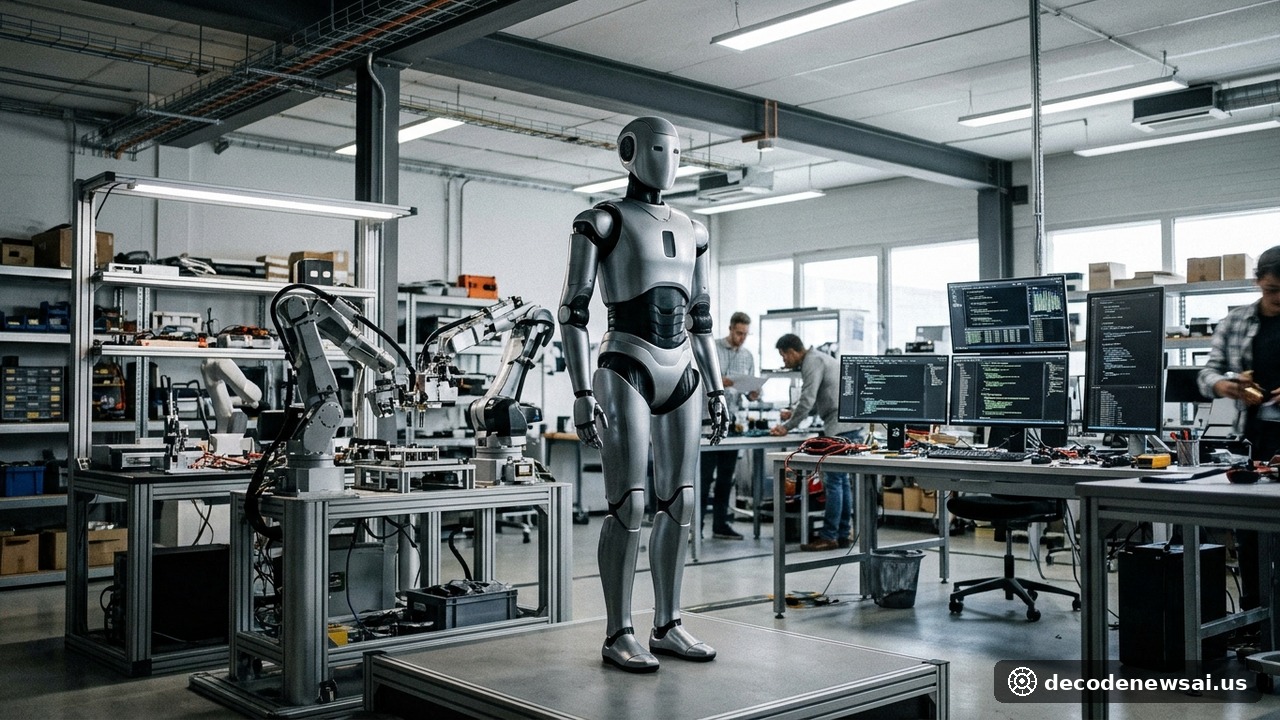
Boston Dynamics and the Toyota Research Institute (TRI) announced a transformative scientific and technological research partnership on November 13, 2026, combining advanced Large Behavior Models (LBMs) with the newly unveiled fully electric Atlas humanoid robot platform. Engineering demonstrations verified that a unified artificial intelligence model can govern bipedal dynamic locomotion alongside dexterous bi-manual manipulation without requiring manually hand-coded behavioral heuristics. The integrated system allows the Atlas humanoid to execute continuous, multi-stage sorting, packing, and heavy logistics tasks autonomously.
According to technical monographs published jointly by Boston Dynamics robotics research teams and TRI scientists, conventional humanoid control systems historically suffered from architectural bifurcation separating high-level manipulation from low-level balance and footstep planning. The joint architecture deploys a single Large Behavior Model that outputs coordinated joint torques across the entire kinematic tree simultaneously. During technical demonstrations, Atlas performed end-to-end task sequences including crouch lifting, dynamic walking, obstacle avoidance, and precise container sorting. When human evaluators introduced mid-task disturbances, such as abruptly sliding bins or closing container lids, the neural model perceived environment state shifts and recalibrated arm and torso trajectories in real time.
To build training datasets for behavioral foundation models, the joint research team deployed immersive teleoperation rigs. Expert human operators wearing virtual reality headsets and haptic feedback exoskeletons demonstrated dozens of industrial assembly tasks manipulating diverse automotive components. The LBM neural network utilizes diffusion policy architectures to map multimodal sensor inputs, including 3D LiDAR point clouds and tactile wrist sensor telemetry, into joint velocity targets. Autonomous skill acquisition cycles achieved tenfold efficiency gains over traditional motion-planning pipelines.
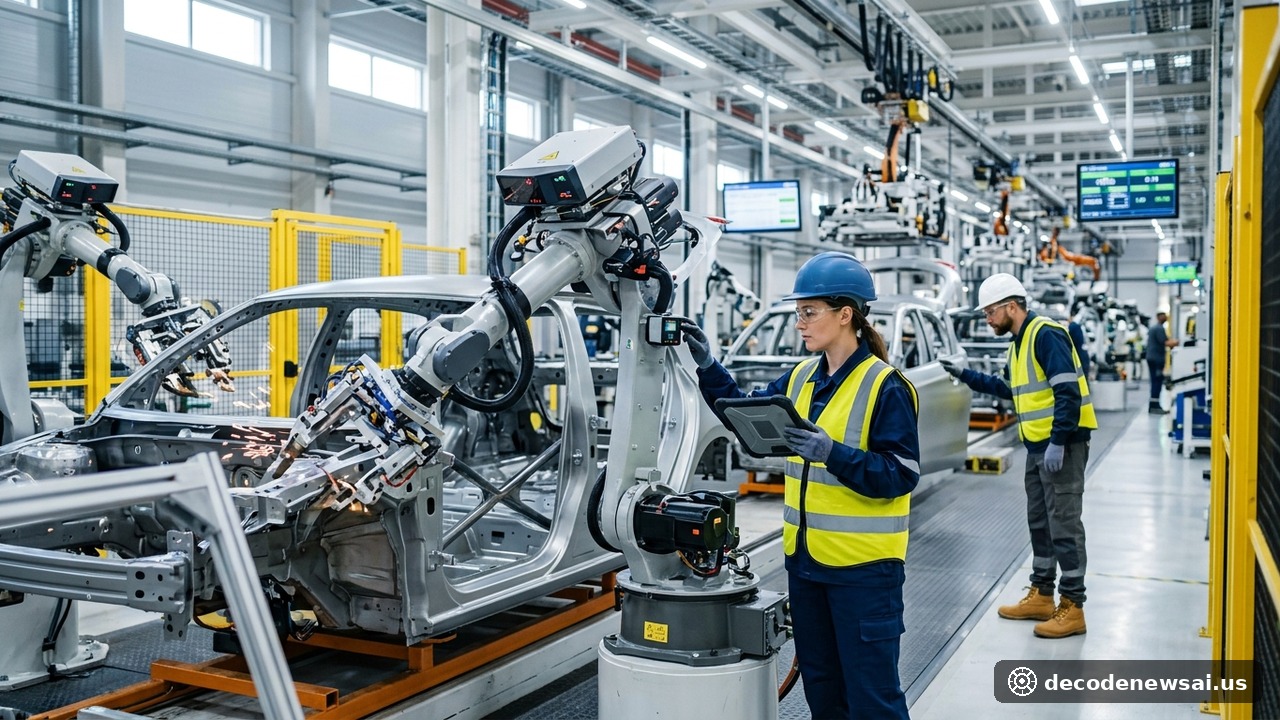
Executive leadership at Hyundai Motor Group (the parent company of Boston Dynamics) and Toyota confirmed that joint engineering units initiated pilot evaluations inside North American automotive manufacturing facilities. Pilots evaluate continuous operational runtime across wiring harness assembly and sheet-metal stamping logistics.