Twilight can illuminate the rocket plume
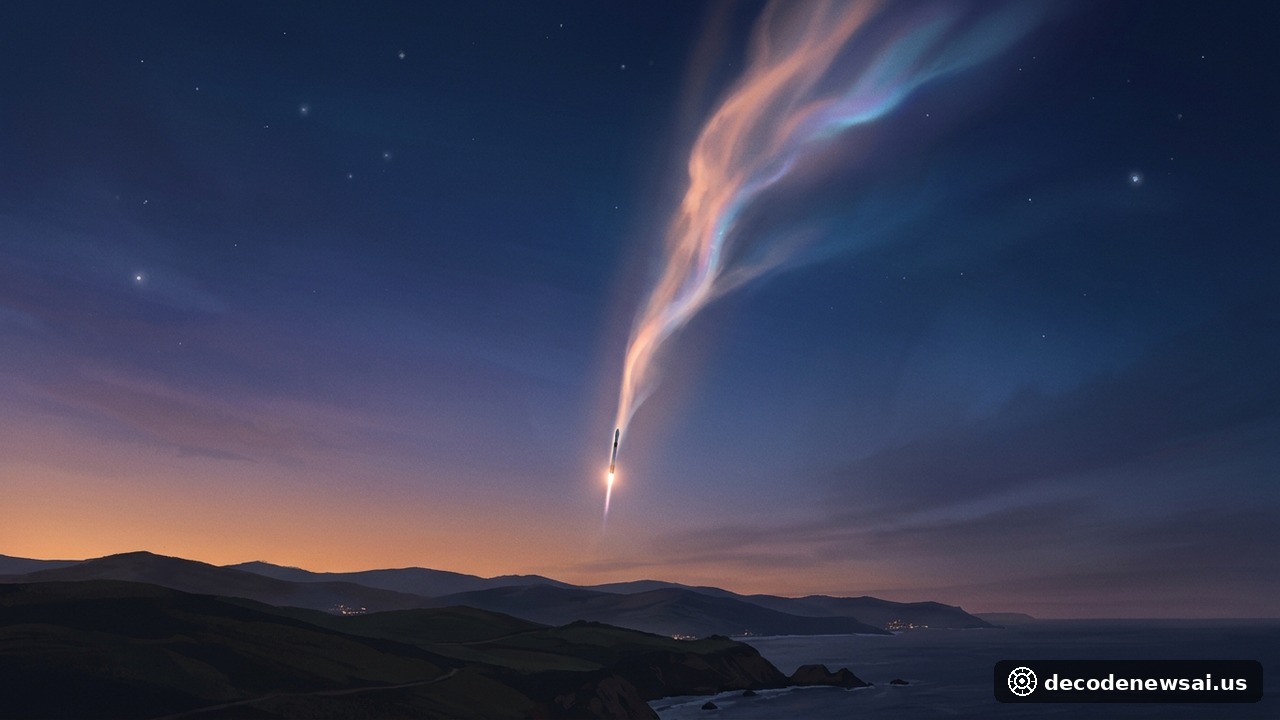
The Weather Channel explained that the rocket’s exhaust could catch direct sunlight after the ground had become dark. The illuminated plume can spread into a shape that observers compare with a jellyfish, with a bright body and trailing tendrils. Under favorable conditions, the effect can be visible from hundreds of miles away.
A similar phenomenon had been seen after an earlier SpaceX launch. The effect is not a separate object or a special payload; it is a visual result of the rocket’s exhaust, altitude, sunlight and viewing conditions.
The original launch window and location
Because the mission involves a national-security payload, public information about its contents and operational details was limited. The weather story focused on the timing and potential visibility of the launch rather than the classified payload.
Viewing conditions varied across the West
The Weather Channel forecast the clearest conditions in southern Utah, Arizona and New Mexico, where storms from the previous weekend were expected to clear. Parts of Los Angeles, Las Vegas and Salt Lake City could have some cloud cover, but breaks in the clouds might still allow a view.
Northern California, including the San Francisco area, and western Nevada were forecast to have more cloud cover, making the phenomenon harder to see. Colorado was expected to have rain and high-elevation snow, reducing the chance of a clear view.
The launch schedule subsequently changed
The original four-hour window should therefore not be treated as proof that the rocket launched at that time. The weather article was a pre-launch forecast, and later schedule changes mean that the actual launch timing must be checked against subsequent announcements.
The visual effect depends on both launch and weather
A “space jellyfish” is a viewing phenomenon created when rocket exhaust remains sunlit at high altitude while observers on the ground are in darkness. Even if a rocket launches as scheduled, clouds can block the view. If the launch is delayed, the original viewing forecast may no longer apply.
The confirmed information is that The Weather Channel published a forecast for the planned November 2 window and identified regions with better or worse viewing conditions. The available reporting does not establish that the phenomenon was observed from every forecast region or that the mission lifted off during the original window. The actual launch status and visibility require confirmation from later launch updates and local weather reports.