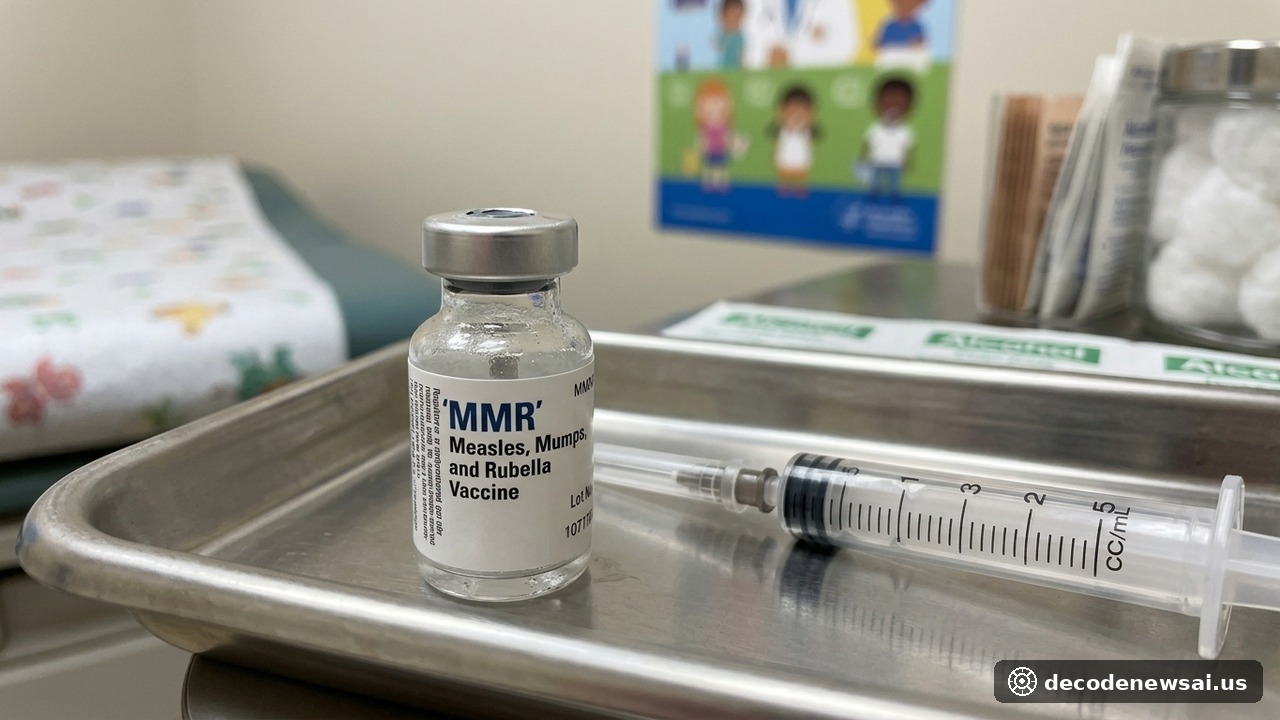
The US Centers for Disease Control and Prevention reported six measles-related deaths in 2026 on Thursday. That doubles the fatality count recorded across all of 2025. As of early November, the CDC logged 5,182 confirmed infections nationwide; Johns Hopkins University's International Vaccine Access Center tracked over 5,400 cases. That is the worst US outbreak since 1991. Viral transmission has run nearly 12 months without interruption. The United States could lose its 26-year-old measles elimination status this week.
The CDC updated its death tracking methodology on September 4; it now relies on National Center for Health Statistics mortality data. The agency did not specify which states accounted for the six official fatalities; state health agencies reported higher local totals. Pennsylvania officials confirmed six measles-associated deaths statewide. New York recorded a child's death on Election Day; that was its first in over three decades. Wisconsin confirmed an infant fatality days later. The CDC's September data-source shift came one day after a Reuters report. Health Secretary Robert F. Kennedy Jr. had questioned whether two Pennsylvania deaths resulted from measles and urged CDC Director Erica Schwartz to exclude them. PolitiFact noted falling kindergarten vaccination coverage in multiple school districts; that has eroded herd immunity thresholds below the 95 percent level needed to halt measles transmission.
Under Pan American Health Organization criteria, a nation loses its elimination certification after 12 months of continuous spread of the same measles strain. The United States first achieved that certification in 2000. On Thursday, the Infectious Diseases Society of America warned that losing the status would represent a major public health setback across North America. Federal and state laboratories have submitted viral genomic sequencing data to PAHO evaluators; the data will determine whether distinct clusters trace back to a single continuous transmission chain.