The United States Department of Transportation directed $20 million on Friday to inaugurate the Great American Digital Corridors program through its Office of the Assistant Secretary for Research and Technology; the federal funding initiative seeks to modernize how adjacent states share highway safety and operations data across high-traffic freight routes; selected projects can receive up to one hundred percent federal cost coverage without mandatory state matching requirements.
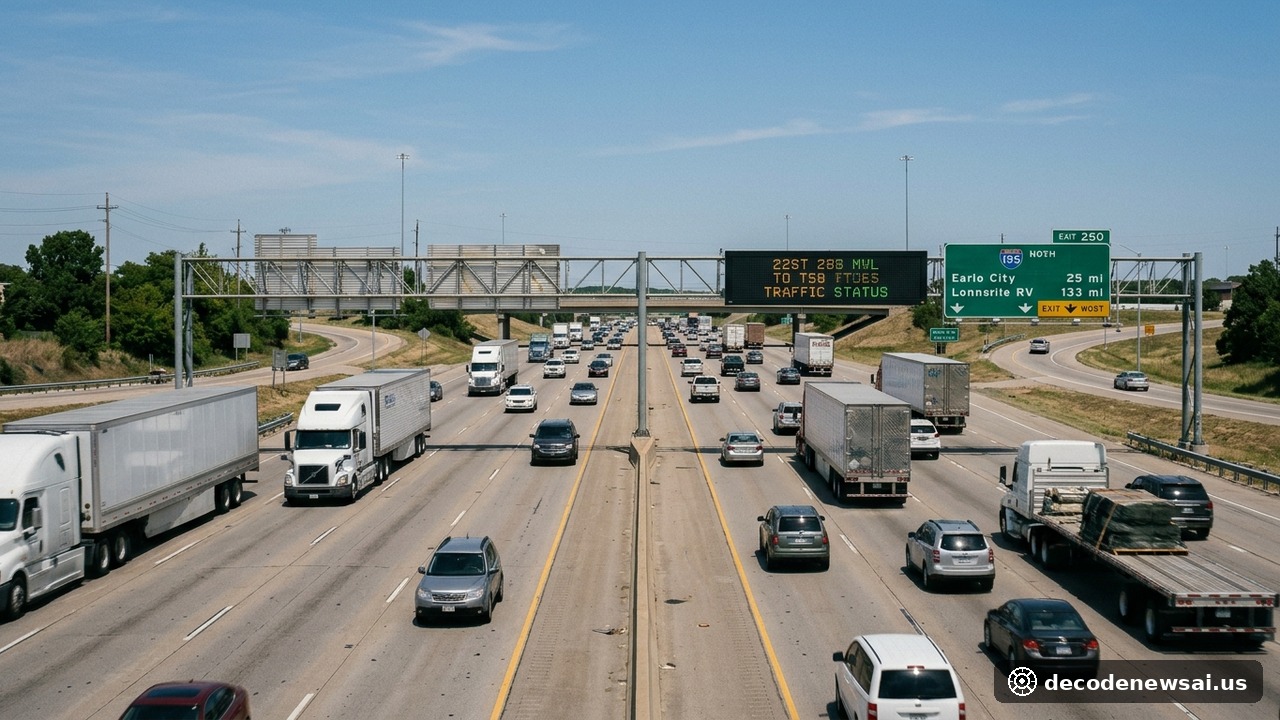
According to official briefings released by the Federal Highway Administration and regional transit reporting by Wisevoter on Friday, highway officials highlighted the need for seamless digital coordination across state boundaries; federal program managers designed the competitive grant opportunity to establish real-time public data streams along interconnected highway networks; prioritized funding tracks include automated work zone safety alerts, recurring freight bottleneck mitigation, commercial vehicle flow enhancement, and integrated emergency response dispatch; grant rules require eligible applications to feature joint proposals submitted by two or more state departments of transportation; applications are due within forty-five days of the formal Notice of Funding Opportunity publication, with an informational technical briefing scheduled for November 23; transportation officials anticipate selecting winning multi-state corridors in early 2027.
Federal Highway Administrator Sean McMaster stated: The Great American Digital Corridors Program advances seamless data sharing across interstate highway corridors to create a more connected and efficient transportation network through regional collaboration, facilitating mobility and ultimately promoting safety on the roads and our national economy; the digital corridors program establishes open-access data architecture standards that feed road condition telemetry directly into connected vehicles, fleet navigation engines, and emergency command centers; infrastructure upgrades will also support testing beds for autonomous commercial trucking fleets across heavy freight arteries.