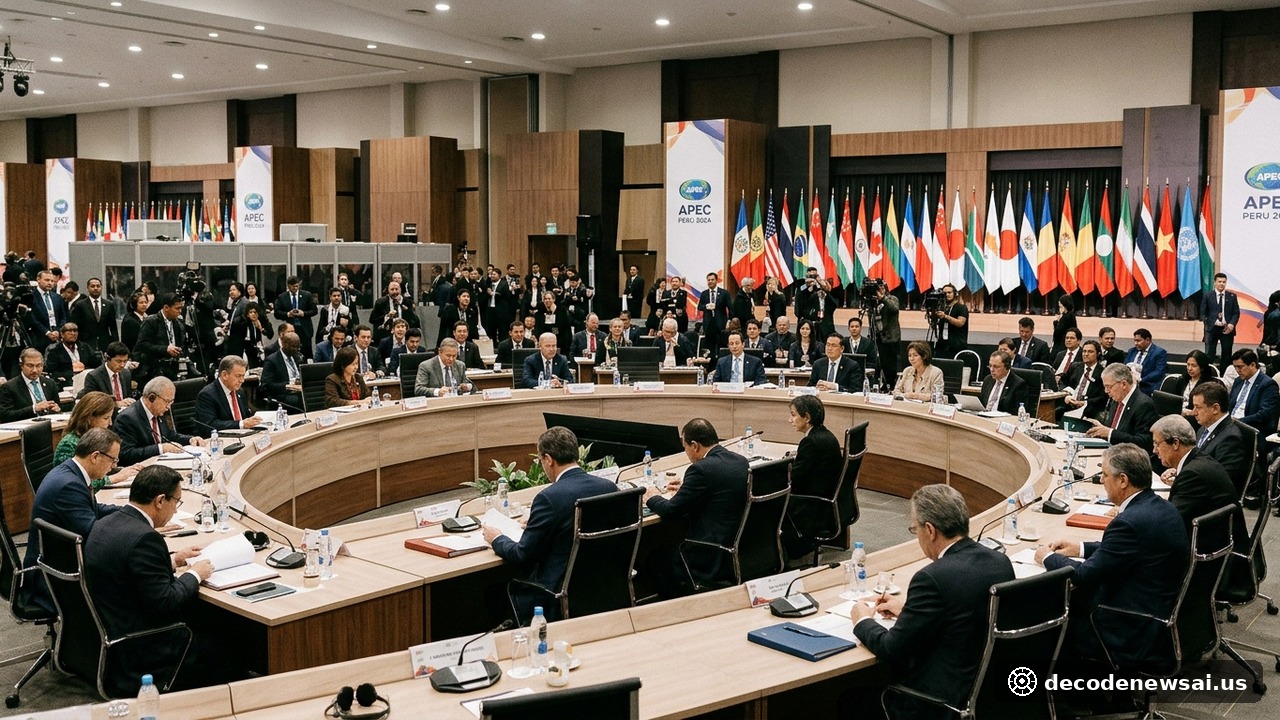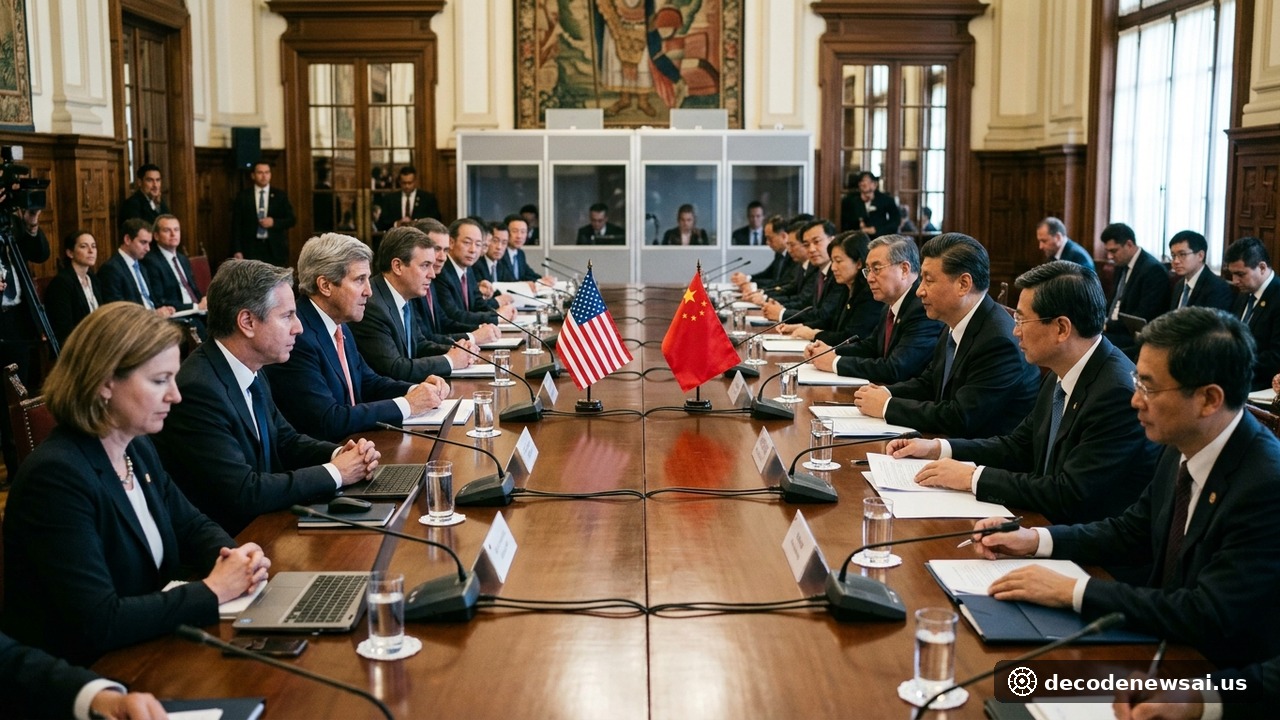
United States President Joe Biden and Chinese President Xi Jinping convened an official bilateral summit on November 13, 2026, in Lima, Peru, on the sidelines of the 32nd APEC Economic Leaders’ Meeting. Diplomatic delegations from both nations conducted closed-door consultations reviewing bilateral relations across strategic security, trade, artificial intelligence governance, and military-to-military communication channels.
According to joint readouts released by the White House National Security Council and the Ministry of Foreign Affairs in Beijing, the two leaders conducted structured discussions spanning nearly two hours. The delegations evaluated specialized working groups addressing counternarcotics enforcement, climate change mitigation, and military theater-level commander hotlines. Both leaders emphasized that continuous high-level military communications remain essential for avoiding unintended operational friction in regional maritime corridors. Xi delivered strategic remarks, emphasizing that China and the United States should act as partners rather than adversaries, pursue mutual benefit rather than zero-sum competition, and adhere to peaceful coexistence and win-win cooperation. He said China stood ready to work with the incoming United States administration to maintain dialogue, expand commercial cooperation, and manage differences.
Biden emphasized that great power competition requires durable operational guardrails to prevent bilateral tensions from escalating into direct confrontation. He reiterated that the United States remains committed to its long-standing One China policy, emphasizing stability across the Taiwan Strait. The delegations discussed unilateral trade restrictions, advanced semiconductor export controls, and inbound investment screening protocols. Chinese negotiators said expansive national-security definitions impair technology supply chains and harm commercial interests. American officials maintained that targeted technology restrictions focus narrowly on advanced military artificial intelligence capabilities to safeguard national security. The heads of state exchanged perspectives on Ukraine and Middle East tensions. Both delegations reaffirmed support for United Nations Charter principles and urged diplomatic negotiations to de-escalate hostilities.