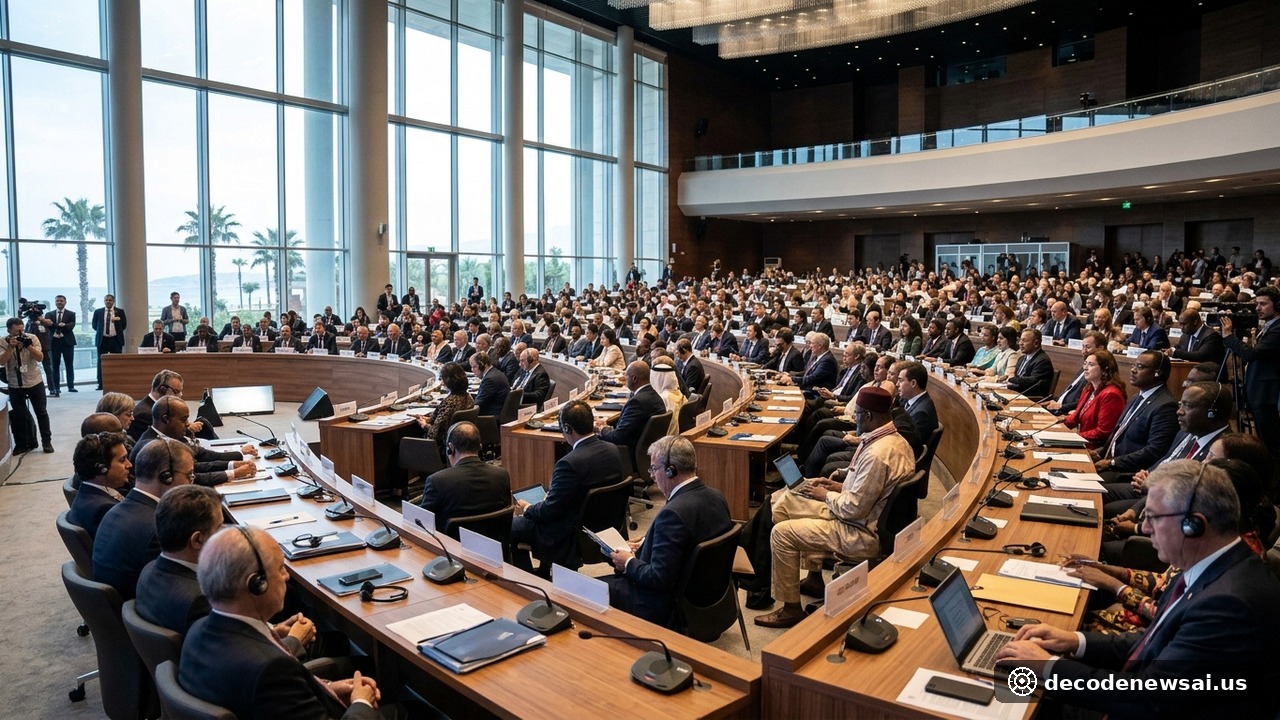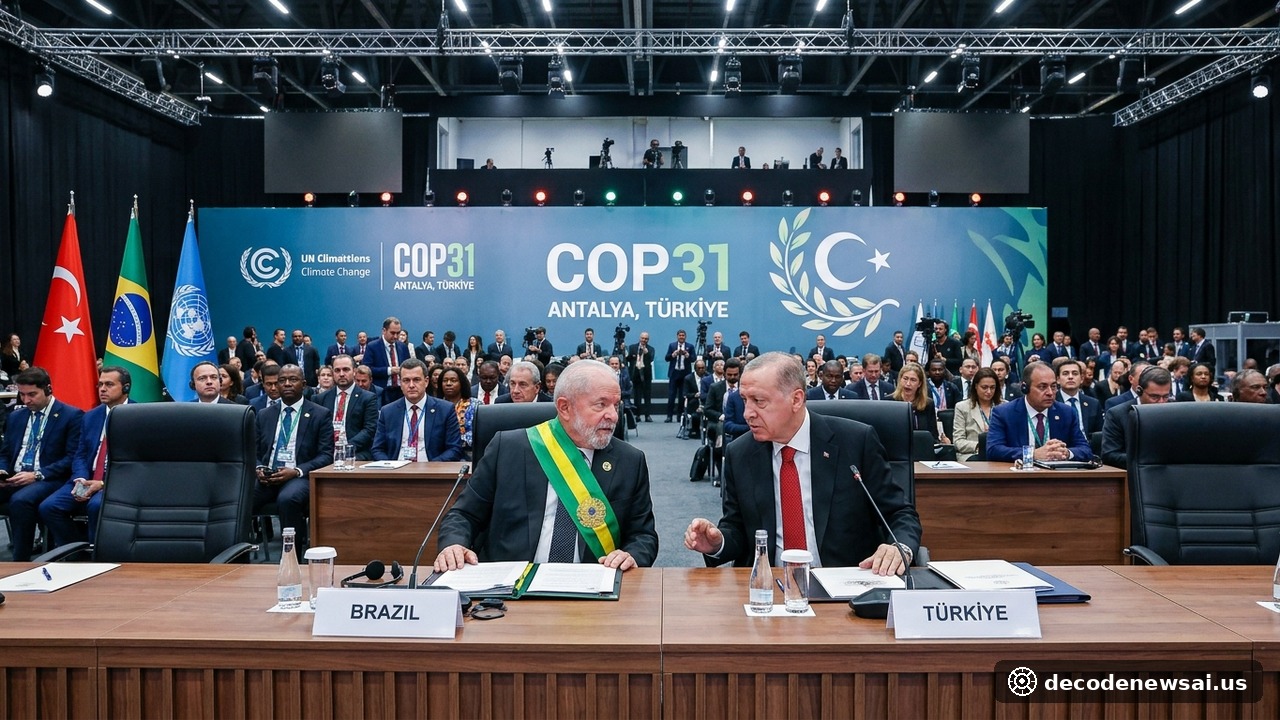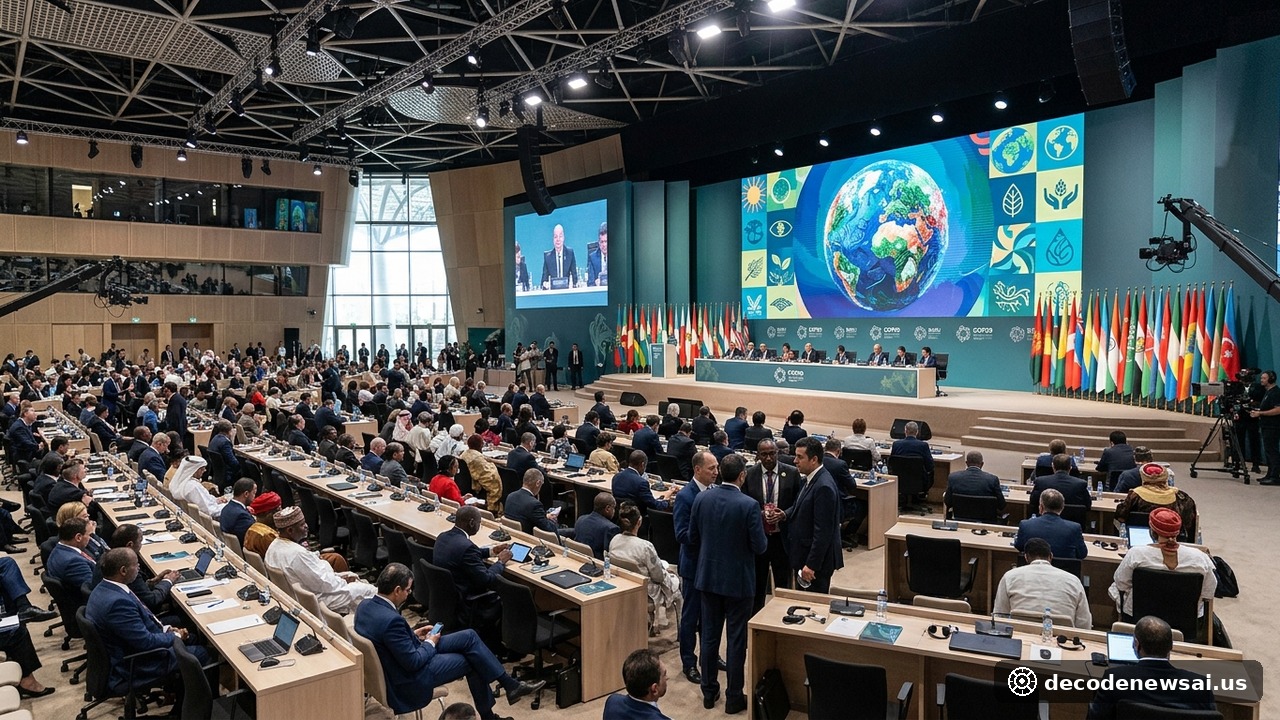
The United Nations Framework Convention on Climate Change opened its COP29 summit in Baku, Azerbaijan, on November 11, 2026. Negotiators achieved an immediate multilateral consensus during the opening plenary session. Delegations approved operational standards governing Article 6.4 of the Paris Agreement. The decision establishes an international regulatory framework for UN-supervised carbon crediting systems. The policy unlocks sovereign bilateral offsets alongside certified carbon registries. Statutory texts published by the COP29 Presidency established baselines for certifying carbon abatement credits. The operational guidance governs forestry preservation, industrial carbon capture, and direct air capture projects. Independent technical supervisory bodies will conduct forensic verification of registered credit claims. The enforcement structure prevents double-counting and greenwashing practices.
According to reporting from Reuters and The Guardian, COP29 President Mukhtar Babayev addressed diplomatic delegates during an opening press briefing. Babayev described the approval as a major breakthrough and said the decision activates a high-integrity carbon market and a transparent channel to mobilize hundreds of billions of dollars in private climate finance for developing nations. United Nations Secretariat economic modeling indicated that a fully functional Article 6 carbon market could direct more than $250 billion annually toward international clean energy and decarbonization projects. Diplomatic talks between European negotiators and the African Group of Negotiators resolved disputes concerning corresponding adjustment rules. The adopted compromise mandates that when carbon mitigation outcomes are transferred internationally, the host nation must deduct that volume from its domestic Nationally Determined Contribution accounting.
Transparent double-entry carbon ledgers eliminate fraudulent duplicate counting claims across national borders. Chief negotiators representing the Alliance of Small Island States emphasized that at least 5 percent of credit issuance proceeds must be directed into the UN Adaptation Fund. Following the Baku consensus, environmental commodity exchanges across London and Singapore announced plans to launch derivative contracts.