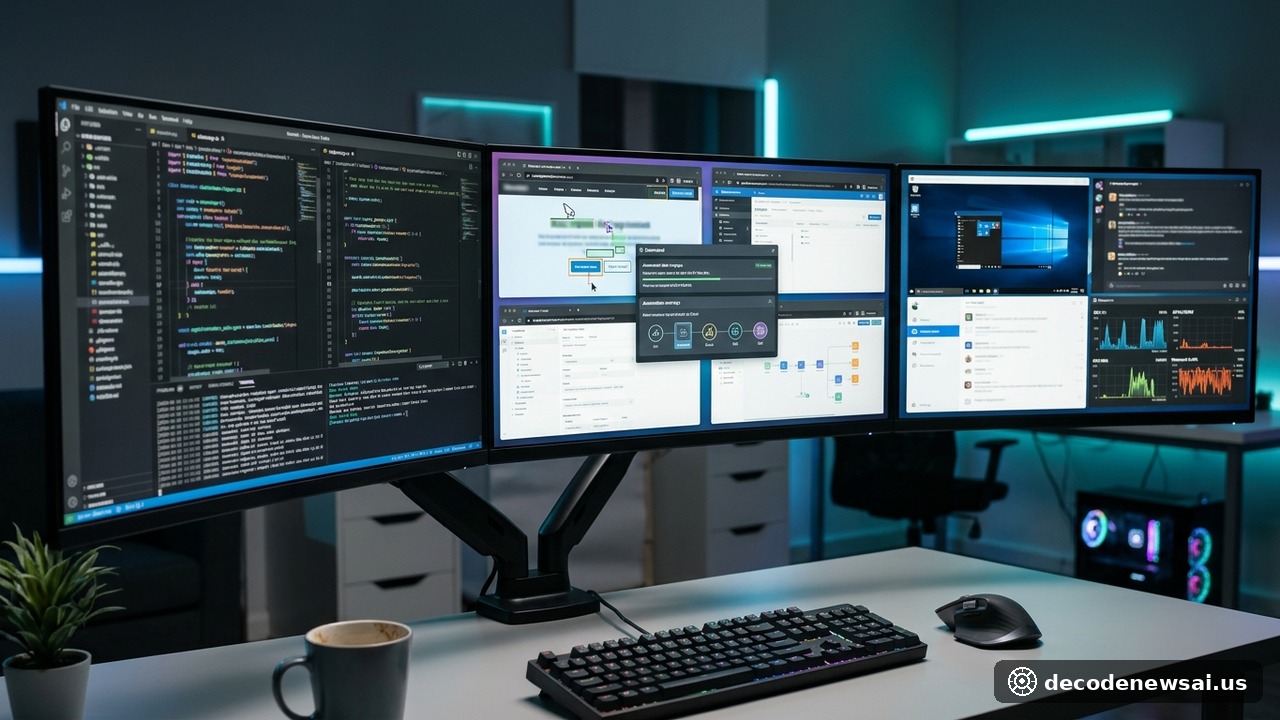
Anthropic deployed a public beta of its upgraded Claude 3.5 Sonnet model with native “Computer Use” API capabilities from San Francisco on November 11, 2026. The functionality enables large multimodal models to perceive graphic user interfaces and execute autonomous keyboard and mouse actions. The model navigates web browsers, activates menus, inputs spreadsheet fields, and coordinates cross-application data pipelines. Technical documentation detailed that the model processes streaming high-resolution desktop screen captures in real time. The neural network calculates pixel coordinates for target interface elements. The runtime environment dispatches native operating system events. The system identifies execution errors and initiates corrective actions; if a webpage experiences network latency or modal popup obstruction, the model waits and retries.
According to reporting from The Verge and Reuters, Anthropic Co-Founder and Chief Science Officer Jared Kaplan addressed software architects during a technology demonstration. Kaplan said the Computer Use API allows foundation models to interact directly with the global software footprint. Developers do not need bespoke integrations; Claude interacts directly with enterprise legacy systems lacking native APIs.
On the OSWorld operational suite assessing multi-step computing workflows across real operating systems, upgraded Claude 3.5 Sonnet achieved an operational success rate of 14.9 percent, doubling prevailing state-of-the-art results across frontier models. Amazon Web Services and Google Cloud announced immediate platform availability across their enterprise managed machine learning environments. Multinational pharmaceutical sponsors, commercial investment banks, and corporate law firms are deploying the technology to automate cross-system reconciliation; complex multi-screen audit verification workflows historically requiring hours of junior analytical labor are executed within minutes by autonomous agents. Enterprise software analysts noted native computer use challenges legacy robotic process automation vendors. Cybersecurity researchers issued recommendations regarding permission boundaries; Anthropic embedded prompt injection defenses and mandatory human-in-the-loop verification gates for high-risk system calls.