The U.S. Supreme Court on November 2 rejected the Trump administration’s emergency request to require California to set aside mail ballots associated with roughly 20,000 people whom federal officials flagged as possible noncitizens. The court gave no explanation and no justice publicly dissented. The decision came on the eve of the final day of voting in the 2026 midterm elections, leaving the federal government without the emergency order it sought to change California’s ongoing ballot-handling procedures.
Supreme Court declines emergency intervention
The Supreme Court denied the Justice Department’s request in a brief order. Reuters and CBS News reported that the order was a single sentence, unsigned and without an explanation. The court did not ask California officials to respond before ruling, and no justice publicly dissented. The application sought immediate, temporary relief: the administration wanted election officials to segregate ballots associated with people on the federal list until their citizenship could be verified. The court’s action was not a final decision on every legal issue in the broader dispute. Denial of emergency relief should not be described as a ruling that every person on the list was eligible to vote, or as a definitive merits judgment on the government’s authority.
Federal list raises accuracy concerns
The dispute began after the Justice Department demanded that California and local election officials set aside ballots associated with people on a federal list and refrain from counting them until their citizenship status could be confirmed. The administration said the people identified might not be U.S. citizens and invoked federal law prohibiting noncitizens from voting in federal elections. California officials challenged the reliability of the list and the data-matching process used to assemble it. They warned that the process could incorrectly flag eligible citizens, including naturalized citizens, and could include people who were not currently registered to vote. The size of the government’s list is not the number of proven illegal votes. Being named on the list does not establish that an individual actually cast a ballot.
UCLA analysis identifies gaps in the list
Lower courts had already rejected the request
Before the Supreme Court acted, U.S. District Judge David O. Carter denied the Justice Department’s request to segregate the ballots on October 28. Reuters reported that Carter questioned the reliability of the government’s data and warned against requiring state and local governments to abandon established election procedures during an ongoing election based on unproven allegations. A three-judge panel of the U.S. Court of Appeals for the Ninth Circuit subsequently rejected the administration’s emergency request by a 2-1 vote. The majority emphasized the state’s authority over election procedures and California’s existing statutory framework for checking voter eligibility and canceling registrations when a voter is shown to be ineligible. One judge dissented. The Supreme Court’s denial marked another setback for the administration’s effort to obtain emergency relief, but it did not replace or expand the lower courts’ specific rulings.
The central dispute concerns election authority
It is illegal for noncitizens to vote in federal elections. That prohibition is not the central legal question in this case. The dispute is whether the federal government can require a state, while voting and ballot processing are already underway, to change its procedures for sorting, holding and counting ballots based on a list whose accuracy is contested. The administration argued that separating the ballots would preserve the ability to identify them after other ballots were processed and mixed together, while citizenship checks continued. California argued that a last-minute demand to identify and isolate the ballots would create serious logistical problems and could prevent eligible citizens’ votes from being counted on time. An unmatched record on the Justice Department list does not establish citizenship status, and allegations made by the government must not be presented as facts already determined by a court.
California voting had reached its final stage
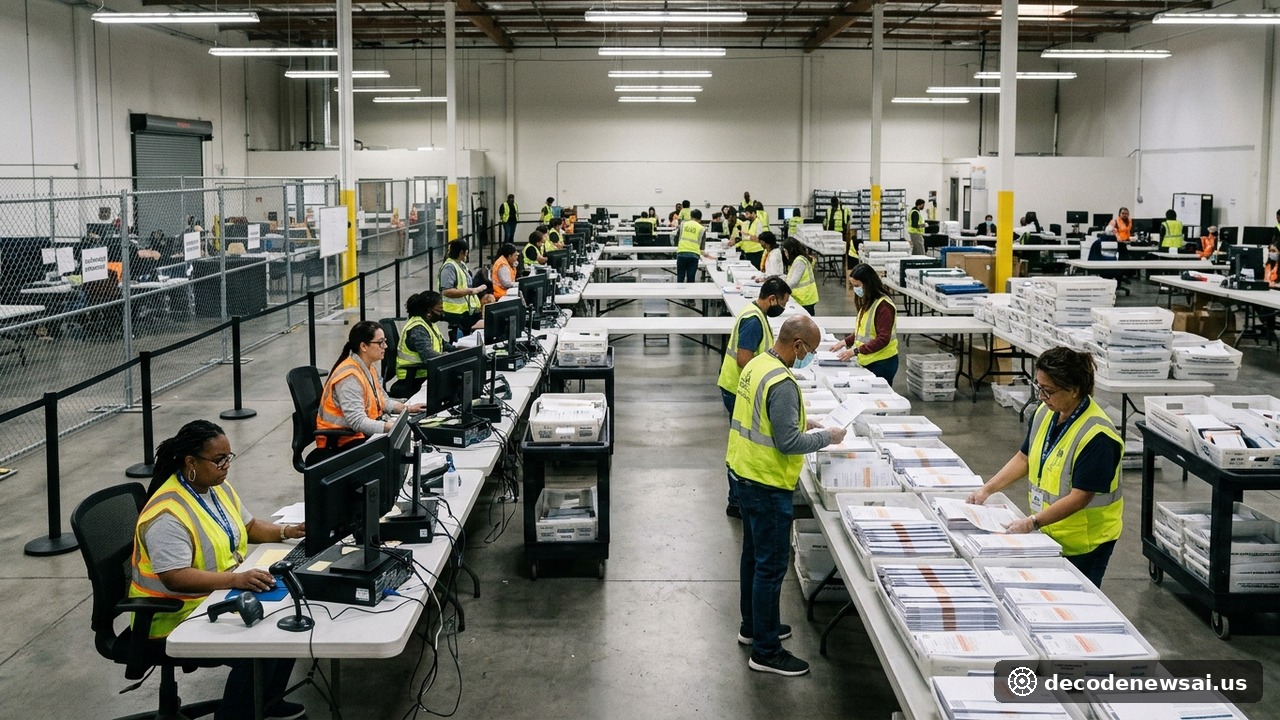
The Associated Press and CBS News reported that more than 6 million mail ballots had been returned in California before Election Day. The state has more than 23 million registered voters. The Supreme Court did not order California to suspend counting or separate ballots associated with the federal list, leaving the state to continue processing ballots under its existing procedures. The ruling did not determine the citizenship, registration status or voting history of each person named by the Justice Department. As the midterm election moves into the counting stage, the accuracy of the federal list, the division of authority between federal and state governments over election administration, and the protection of eligible voters from mistaken exclusion remain central issues in the related litigation and public debate.