A Rose-Colored Rock From the Sahara Is a 4.1-Billion-Year-Old Slice of Mars
Desert hunters picked up eight pink stones near a Malian salt flat
A JPL-led team dated it and published in Science
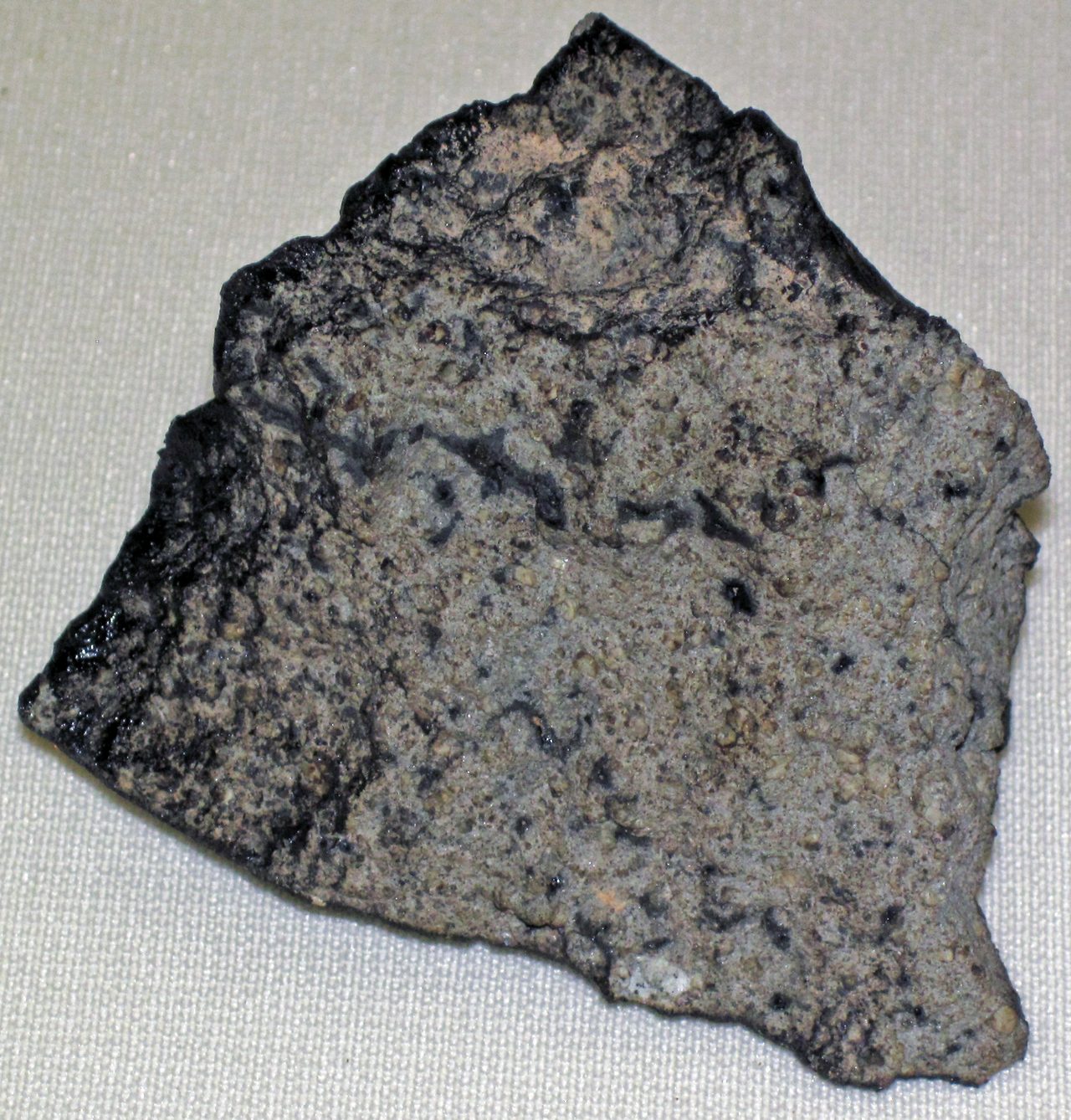
Planetary scientist Yang Liu of NASA's Jet Propulsion Laboratory led the age-dating work with Carl Agee and Karen Ziegler of the University of New Mexico and Francis Tissot of Caltech. Their characterization paper appeared in Science on October 29, 2026. NASA's announcement called the nearly 2-pound rock one of the oldest Martian meteorites ever found and one of roughly 435 known meteorites from the Red Planet.
Zircon grains smaller than a fingernail gave the age
The team dated microscopic zircon crystals using uranium-lead analysis, cross-checked with rubidium-strontium ratios that gave a similar answer. Tissot's pioneering method analyzed single mineral grains from a chip smaller than a fingernail. Agee called Teghaza 001 the oldest known Martian lava rock, "just one unadulterated rock type," unlike the mixed breccia nicknamed Black Beauty, which formed about 2.1 billion years ago.
Slow-cooled magma turned into primordial crust
Teghaza 001 is a coarse-grained igneous rock, a plagioclase-rich gabbro classified as a shergottite, the most common class of Martian meteorite. It began as magma that cooled slowly underground and hardened into part of the Martian crust, dominated by feldspar and pyroxene. Its texture and mineral mix match nothing seen in previous Mars samples, suggesting it comes from a region no rover has visited, closest to terrain measured by the Mars Reconnaissance Orbiter in the southern highlands.
Water altered the rock in Mars's ancient past
Chemical analyses show the rock was altered by underground Martian water in the ancient past, after the rock itself had formed. Hydrogen isotopes in phosphate and oxygen isotopes in minerals and bulk samples both point to water-rock interaction. The data suggest early Mars had a more dynamic water cycle than previously thought, a picture extended by a separate June paper in Science Advances on the meteorite's water content.
One of three ancient survivors among hundreds of young rocks
An impact blast, a long space voyage, an unknown arrival date
"It was blasted by an impact from the surface of Mars and was flying through space until its path crossed that of Earth," Liu said. The stone then survived atmospheric entry and landed in the Sahara. When it fell to Earth is unknown. Liu added that it is very old and similar to some of the oldest rocks on Earth.
What comes next: atmosphere traces and a new crustal benchmark
Second author Lee Saper, formerly a postdoctoral scholar at JPL and now at NASA's Ames Research Center, called it "our first piece of Martian crust from a part of Mars we've never had a sample of before," recording water-rock interaction and possibly an imprint of the atmosphere as Mars lost its water. Researchers will now probe those atmospheric traces and use the meteorite to benchmark models of the early crust and mantle. (Sources: NASA, CBS News, Smithsonian Magazine, Ars Technica, Phys.org, University of New Mexico, Sci.News.)