Prague Takes to the Streets Over Plan to Put Public Media on the State Budget
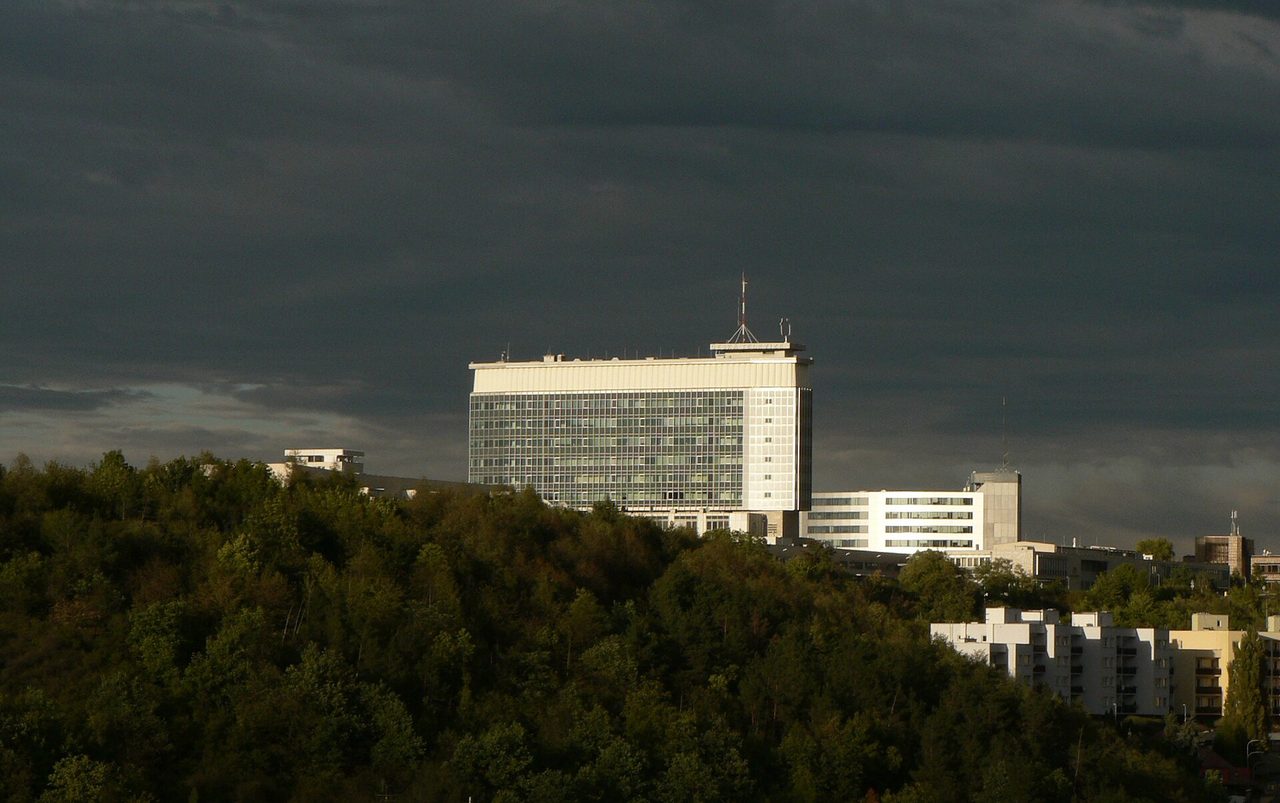
Photo: sandwort / CC BY-SA 3.0 · via Wikimedia Commons
Prague Takes to the Streets Over Plan to Put Public Media on the State Budget
Thousands fill the Old Town Square
Several thousand demonstrators packed Prague's Old Town Square on the afternoon of October 25 to protest the government's plan to overhaul how public media are funded. Called by the civic group Million Moments for Democracy, the rally began at 4 p.m. The crowd chanted "We've had enough" and "This must not be allowed to pass" — along with "4:36," the early-morning hour at which the lower house pushed the draft through its first reading. Organizer Mikulas Minar told the crowd that only mafia syndicates or the Soviet Politburo make decisions at 4:36 in the morning.
Licence fees scrapped, broadcasters to live off the budget
At the heart of the reform is the abolition of the household licence fee that funds Czech Television and Czech Radio, replacing it with direct allocations from the state budget. Households currently pay 205 crowns (about $9.44) a month. The government's proposal says it is following a European trend under which ever more European countries depart from fee-based funding — and it is also keeping a pre-election pledge by ANO, the leading party in the governing coalition.
A surprise Friday ambush ignites the backlash
What lit the fuse was procedure. On Friday, October 23, the bill was unexpectedly brought to the floor of the lower house outside the planned order of business, with debate dragging on into Saturday. Opposition parties and media advocacy groups accused the coalition of ramming the legislation through without proper scrutiny. On Friday, the European Broadcasting Union together with 15 other organisations, including fellow public broadcasters and Reporters Without Borders, demanded more debate and the removal of any measures threatening the broadcasters' financial sustainability.
Babis pushes back: no war, no nationalisation
Prime Minister Andrej Babis rejected accusations of muzzling the press. Writing on Facebook late on Friday, he said there was no war on independent media, no fight over democracy, and no media nationalisation in preparation — the government was simply honouring its campaign promise to scrap the fees. Critics are unconvinced: opposition parties have likened the overhaul to the media consolidation under Viktor Orban in Hungary, warning that broadcasters living off annual budget handouts will lose their independence.
The money shrinks first: about 15 percent less
The financial hit is concrete. The proposal would cut funding for Czech Television and Czech Radio by about 15 percent, possibly as early as next year, with nominal funding then frozen for several years. Czech media calculate the two broadcasters' combined budgets would fall by 1.4 billion crowns against this year, to 7.8 billion crowns. Awkwardly, the 2027 budget projects a wider deficit yet makes no provision at all for public media funding — leaving open where the money would come from.
A strike and a bigger rally are already scheduled
The Veřejnoprávně organisation, representing Czech Television and Czech Radio staff, has called a full-day strike for Tuesday, November 3, backed by labour unions, university rectors, churches and international media organisations. Organisers have also called a larger rally at Letna Park on November 15 — two days before the November 17 anniversary of the 1989 Velvet Revolution that ended more than 40 years of communist rule. Milan Kotal, a 94-year-old demonstrator, said he had already lived through two state takeovers of television in Prague, by the Nazis during the war and by the Communists until 1989: what the government is doing now, he said, is unacceptable.
Two hurdles remain, and the Senate is the next battleground
The bill has cleared only the first of three required readings in the lower house and must still pass two more votes plus the upper house before becoming law. On the night of October 23, hundreds of people had already kept vigil at Malostranske namesti near parliament. The November 3 strike and the November 15 Letna rally now stand as two obstacles the bill cannot avoid on its way through.
Sources
- Al Jazeera: Thousands protest in Prague against public media funding reforms
- Reuters: Thousands protest Czech government's public media overhaul after rushed vote
- Yahoo News: Thousands gather in Prague to protest licence fee plans
- U.S. News: Thousands Protest Czech Government's Public Media Overhaul After Rushed Vote
- praguedaily.news: Czech Media Funding Plans Spark Protests in Prague