Modders Remove the Speed Limiter on Three Generations of GeForce Cards
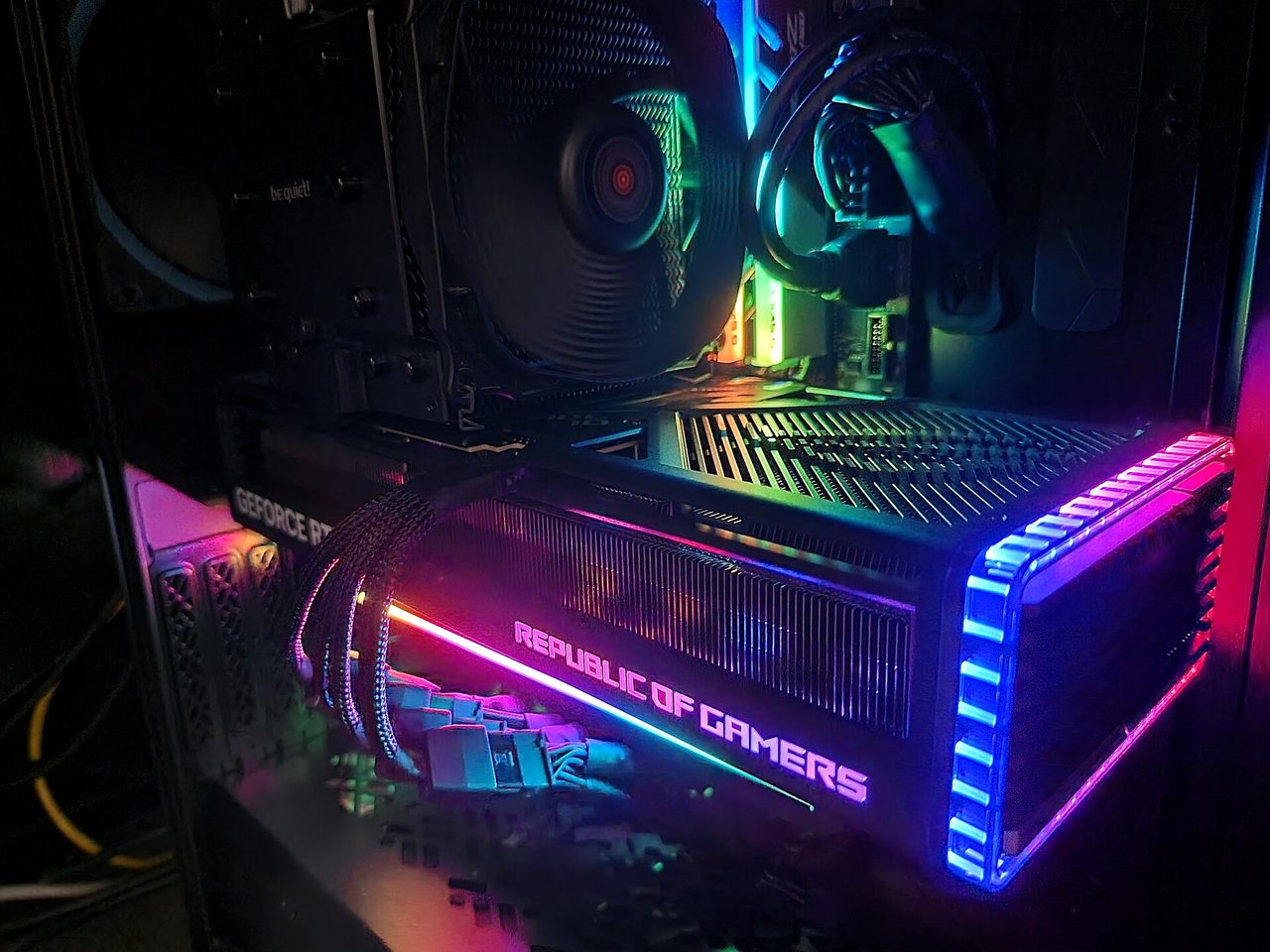
Photo: Benlisquare / CC BY-SA 4.0 · via Wikimedia Commons
Modders Remove the Speed Limiter on Three Generations of GeForce Cards
Three open-source projects cover three GPU generations
The compute limiter on consumer GeForce cards has been cracked three times over in a single week. As TechPowerUp reports, Zagitta's gpu-unlock targets Ampere-based RTX 30 cards, JustAResearcher's gpu-unlock-ada targets Ada-based RTX 40 cards, and a Turing-unlock project covers RTX 20 cards. Together they lift the compute ceiling on three generations of gaming GPUs to near professional-grade levels, with peak gains of about 2x.
A boot-time module flips one register, no flashing needed
The mechanism is strikingly simple: a Linux kernel module runs at boot, before Nvidia's stock driver loads, and flips a hardware speed-select register from half-rate to full-rate issue for FP16 and BF16 fused operations with FP32 accumulation. Notebookcheck quotes the developer's account that such operations on consumer cards previously ran at roughly half the rate available on professional GPUs. After rewriting the register and resetting the GPU, the module hands control back to the unmodified driver, so there is no VBIOS flash and no patched driver.
The half-speed lock protected the professional lineup
Why the lock existed is no mystery. Both onepercentlows and Frandroid describe it as deliberate product segmentation: full-rate half-precision throughput was reserved for expensive Quadro, Tesla, and data-center cards, even where gaming cards shared the same silicon. The RTX 40 series raised the bar further with signed boot firmware plus four privilege checks that blocked the older Ampere technique. JustAResearcher's new payload slips past all four checks before the driver binds to the hardware, but coverage is not line-wide: the module currently accepts only the RTX 4090, with the RTX 4070 Ti Super and the 16GB RTX 4060 Ti as experimental, single-card cases, and other Ada models unsupported.
Local AI runners gain the most
The biggest winners are people running models locally. Benchmarks cited by Wccftech show an RTX 3090 Ti at a 450W power limit moving from 87.46 to 118.39 TFLOPS in FP16, 87.50 to 157.41 TFLOPS in BF16, and 42.58 to 82.61 TFLOPS in TF32 dense matrix multiplication. On the RTX 4090, FP16 and BF16 tensor throughput doubles from 165.6 to 331.6 TFLOPS. Community reports cited by Notebookcheck put an RTX 3090 at 129.6 TFLOPS in BF16, up from 77.5, with vLLM inference up to 36% faster and ComfyUI image-generation throughput roughly 47 to 59% higher on a 3090 Ti.
The free lunch has three catches
The costs are equally clear. IT BOLTWISE notes the change activates at boot and voids the manufacturer's warranty. Notebookcheck points out the Ampere project is Linux-only, with a Windows port booted just once on a single machine. And gains are workload-dependent: one RTX 3090 user saw only 16% faster long-context prompt processing with token generation practically unchanged, while gaming improvements remain unproven. Wccftech adds a market sting in the tail: used Ampere card prices are already climbing, so latecomers may pay a premium for their "free" performance.
Sources
- TechPowerUp: GeForce Unlocked: Modders Boost RTX 20, RTX 30, and RTX 40 Compute Performance by Up to 2x
- Wccftech: NVIDIA GeForce RTX 30 GPUs Get Up To 2X Faster AI Compute Performance With New GPU Unlock Mod, Real-World Gains Of Up To 60%
- Notebookcheck: Nvidia RTX 3090 performance nearly doubles with free GPU unlock, but there's a catch
- onepercentlows: GPU Unlock mods boost RTX 30 and 40 series AI compute performance
- IT BOLTWISE: GeForce-RTX-Mods verdoppeln Tensor- und Matrix-Throughput bei GA- und AD-GPUs