China's Seventh Generation Waits in the Wings as a depleted leadership faces 2027
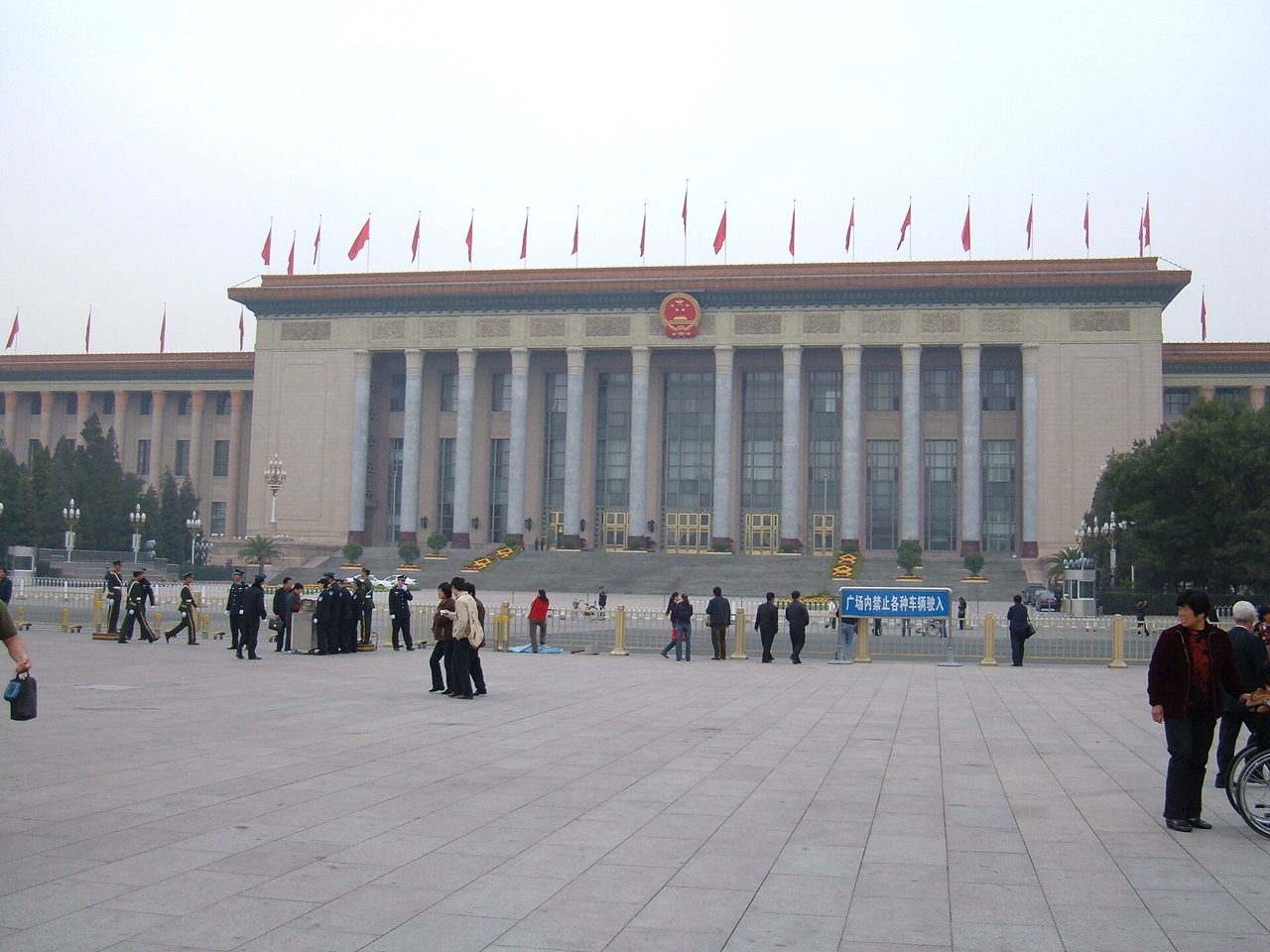
Photo: BrokenSphere / CC BY-SA 3.0 · via Wikimedia Commons
China's Seventh Generation Waits in the Wings as a depleted leadership faces 2027 As the Chinese Communist Party opens its fifth plenum on October 26, attention is fixed less on the communique than on the queue forming behind it. The party's seventh generation — the "7G" cadres born in the late 1960s and the 1970s — is moving toward the center of power, and how fast they get there will shape China after 2027.
A plenum about discipline, not promotions
The Central Committee meets in Beijing from October 26 to 29, 2026, to deliberate what state media call "the sustained advancement of full and rigorous party self-governance" (AsiaDaily). Roughly a year before the 21st Party Congress, analysts describe the conclave as a staging ground: "less about deciding individual promotions, more about signalling the system-wide changes Xi wants ahead of a competitive 2027 Party Congress," Ruby Osman of London's Tony Blair Institute told Reuters.
Xi, 73, is expected to seek a fourth term
Xi Jinping, 73, is widely expected to secure a fourth term as party chief at the congress, due in autumn 2027 (AsiaDaily; La Libre). Some analysts speculate he could revive the title of Party Chairman, a rank last held by Mao Zedong. AsiaNews dates the congress to October 2027, the fourth party congress of the Xi era.
The new guard is old: recent Politburo entrants average 62
An analysis by Li Cheng of the University of Hong Kong finds the average age of newcomers in the two most recent Politburo line-ups was about 62, older than in the three line-ups before (SCMP). Against that grey backdrop, the post-1970s cohort stands out precisely because of its youth.
PhDs and engineers dominate the 7G resume
About half of the leading 7G cadres hold doctoral degrees, and roughly one-third trained as engineers, with economics and finance the other common backgrounds, according to Li's analysis (SCMP). Xie Maosong of Tsinghua University's National Institute of Strategic Studies says the party wants cadres with "absolute political loyalty, integrity, fighting spirit, technological or hard-science expertise, grass-roots experience and hardship resilience."
Yin Yong, the Harvard-trained mayor of Beijing
Beijing Mayor Yin Yong, 57, embodies the technocratic ideal: a Harvard master's in public administration and a former deputy governor of the People's Bank of China (SCMP; Asia Today). Straddling the sixth and seventh generations — born in the late 1960s — figures like Yin illustrate how blurred the generational boundary has become.
Shanghai gets a 54-year-old mayor
Zhu Zhongming, born in 1972, was elected mayor of Shanghai on September 30, less than a month after becoming acting mayor following the resignation of 66-year-old Gong Zheng on September 4 (Caixin Global). Citing Hong Kong01, CHOSUNBIZ notes Zhu is China's second-youngest provincial-level government chief after Shanxi Governor Lu Dongliang, born in 1973. His elevation brings the number of 1970s-born provincial government heads to five, alongside Jiangsu's Liu Xiaotao, Zhejiang's Liu Jie and Guangxi's Wei Tao, all born in 1970.
A hollowed-out high command needs filling
The need for fresh blood is sharpened by the purges. Brookings, in an October 23 article, found the Central Military Commission had shrunk from seven members to two — Xi and General Zhang Shengmin — with as many as 33 theater-command officers removed a rung below. Three of the 24 Politburo members chosen in 2022 are gone, "the most removed from a sitting Politburo in one term since 1980," Jean Christopher Mittelstaedt of the University of Zurich told Reuters, alongside five of the original seven CMC members.
Empty chairs: barely three-quarters of the Central Committee may survive
Turnout at the plenum "will most likely be the lowest at any post-Mao plenum, below last October's 168 full and 147 alternate members," Mittelstaedt told Reuters. Researchers Thomas, Tsering and Wang estimate only 161 full and 130 alternate members will carry over — just 77.4 percent of the 2022 cohort (AsiaNews). Reuters reports the plenum will ratify the expulsions of Politburo members Zhang Youxia and Ma Xingrui on corruption and disloyalty charges.
The provinces are already moving
Theworthy shuffle has begun below the top: within two days, the party replaced its chiefs in Gansu, Qinghai, Tibet, Anhui, Henan and Fujian, and quietly swapped two senior Taiwan Affairs Office posts, returning a veteran of cross-strait business to the economic portfolio (Storm). With many of Xi's closest associates likely to retire in 2027, Osman told Reuters, "disciplinary campaigns are a way to ensure a new generation with fewer personal ties share his political standards" — and the 7G, now about 8 percent of the central leadership (SCMP), stands to inherit the vacancies.
Sources
- South China Morning Post: China's next generation of leaders waiting in the wings for more senior roles
- CHOSUNBIZ: Post-70s officials reshape China politics as Zhu Zhongming becomes Shanghai mayor - CHOSUNBIZ
- Brookings: Xi's party: What to look for at the upcoming Chinese Communist Party plenum
- AsiaDaily: China's Fifth Plenum Puts Xi's Discipline Drive and Depleted Leadership in Focus
- The Straits Times: Tougher discipline, and Xi's authority, key at China's Communist Party's fifth plenum