Iguazu Falls at the Brazil-Argentina Border: Water Flowing at Near-Record Rates
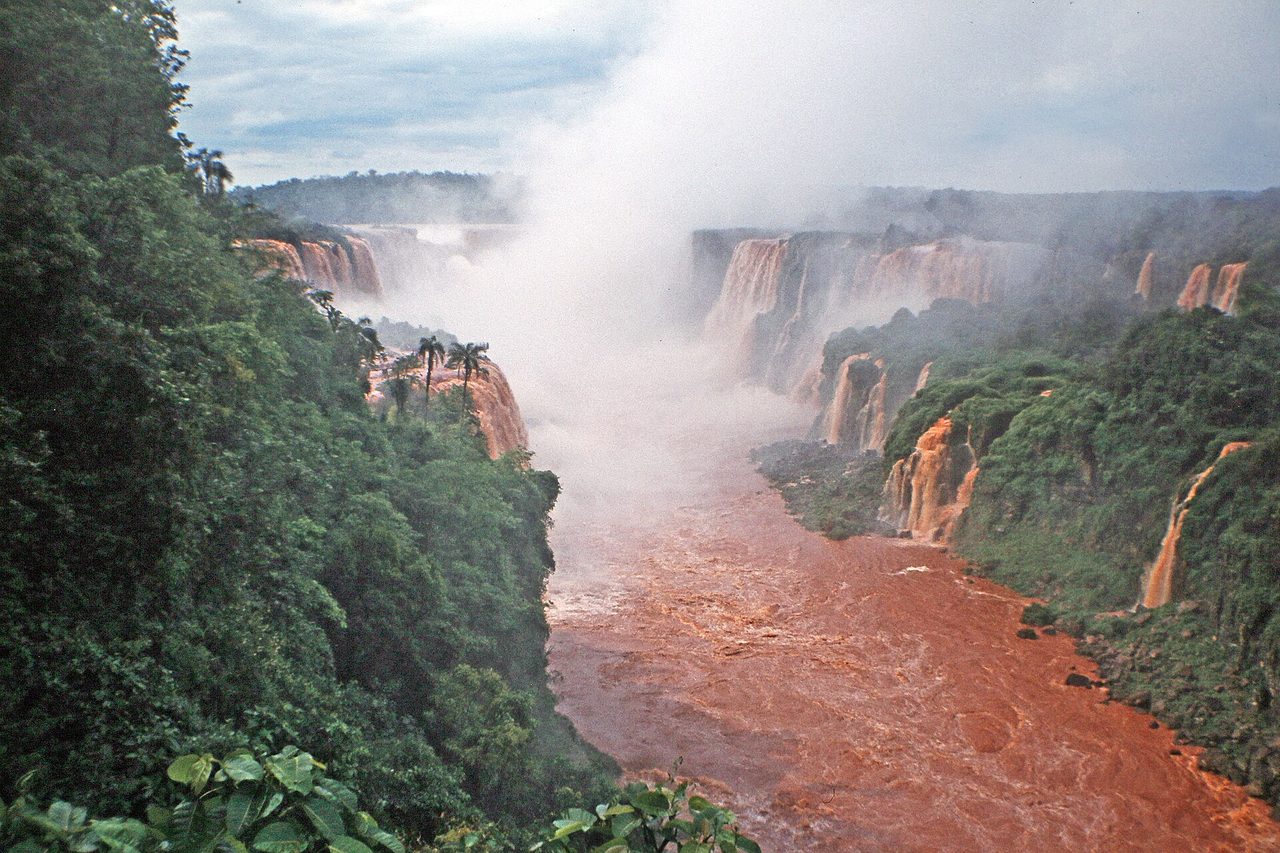
Photo: W. Bulach / CC BY-SA 4.0 · via Wikimedia Commons
Iguazu Falls at the Brazil-Argentina Border: Water Flowing at Near-Record Rates
Near-Record Flow at Iguazu Falls
In October 2026, Iguazu Falls on the Brazil-Argentina border experienced one of its most dramatic surges in recent memory. Officials registered nearly 12 million liters (more than 3 million gallons) of water per second tumbling over the falls on one day — 10 times the normal flow. The red, muddy waters of the Iguazu River raced furiously toward the falls' edge, lapping the bottom of narrow metal catwalks that usually hover several feet above the falls during normal-rainfall years.
Flow Hits Six Times the Average
According to local government figures, the normal flow at Iguazu Falls is about 1.5 million liters per second (1,500 cubic meters), while the flow on October 14 reached approximately 15.7 million liters per second. José María Hervás, director of Iguazu National Park in Argentina, said the Iguazu River's flow exceeded 12,000 cubic meters per second on Monday, October 12 — more than six times the average rate — prompting a precautionary closure. The park later announced it would reopen on Tuesday, citing a "gradual decline" in the river's flow.
El Niño Drives Near-Record Waters
Scientists link the relentless rains to this year's Super El Niño, which is causing extreme weather events across the globe. A rain-soaked October in Brazil sent near-record volumes of water surging over the towering cliffs. Iguazu is not a single waterfall but a complex of cascades spanning more than a mile across both countries. The all-time record flow was 45,700 cubic meters per second on June 9, 2014; the current surge, while not surpassing that mark, ranks among the highest ever recorded.
Walkways Shut, Dozens Evacuated
Authorities in both countries closed key tourist walkways, including access near the famous Devil's Throat. On the Brazilian side, park authorities restricted access to the main viewing walkway on October 11 after the river's flow rose to approximately 8.8 million liters per second. In Argentina, seven families were evacuated in Concordia and 31 people in Paso de los Libres. The Iguazu River rose just over two meters between Sunday and Monday at Puerto Iguazu, reaching 24.30 meters against an alert level of 25 meters. The binational Salto Grande dam is releasing about 18,000 cubic meters per second.
High Flows May Return Through December
The Iguazu River is one of three major rivers originating in southern Brazil, alongside the Paraná and Uruguay rivers. National weather services expect above-average rainfall in southern Brazil through December, meaning high flows at Iguazu Falls could recur. Analysts forecast the volume could reach 13 million liters per second by Wednesday. El Niño-driven intermittent flood pulses are expected to repeat throughout the seasonal rainy period until the river basins stabilize.
Sources
- NPR: Super El Niño causes Iguazú waterfalls to flow at near-record rates
- The Guardian: Iguazu Falls in South America hits record 10 times normal water flow – video
- Travel And Tour World: Brazil and Argentina Restrict Iguazú Falls Walkways as Floodwaters Reach Ten Times Normal Flow
- GPB: Greetings from the Brazil-Argentina border, where waterfalls are flowing at near-record rates
- MercoPress: Iguazú Falls closed as the river's flow tops 12,000 cubic metres per second