Seven Days to Reopen Hormuz, and 6,000 Crews Still Waiting
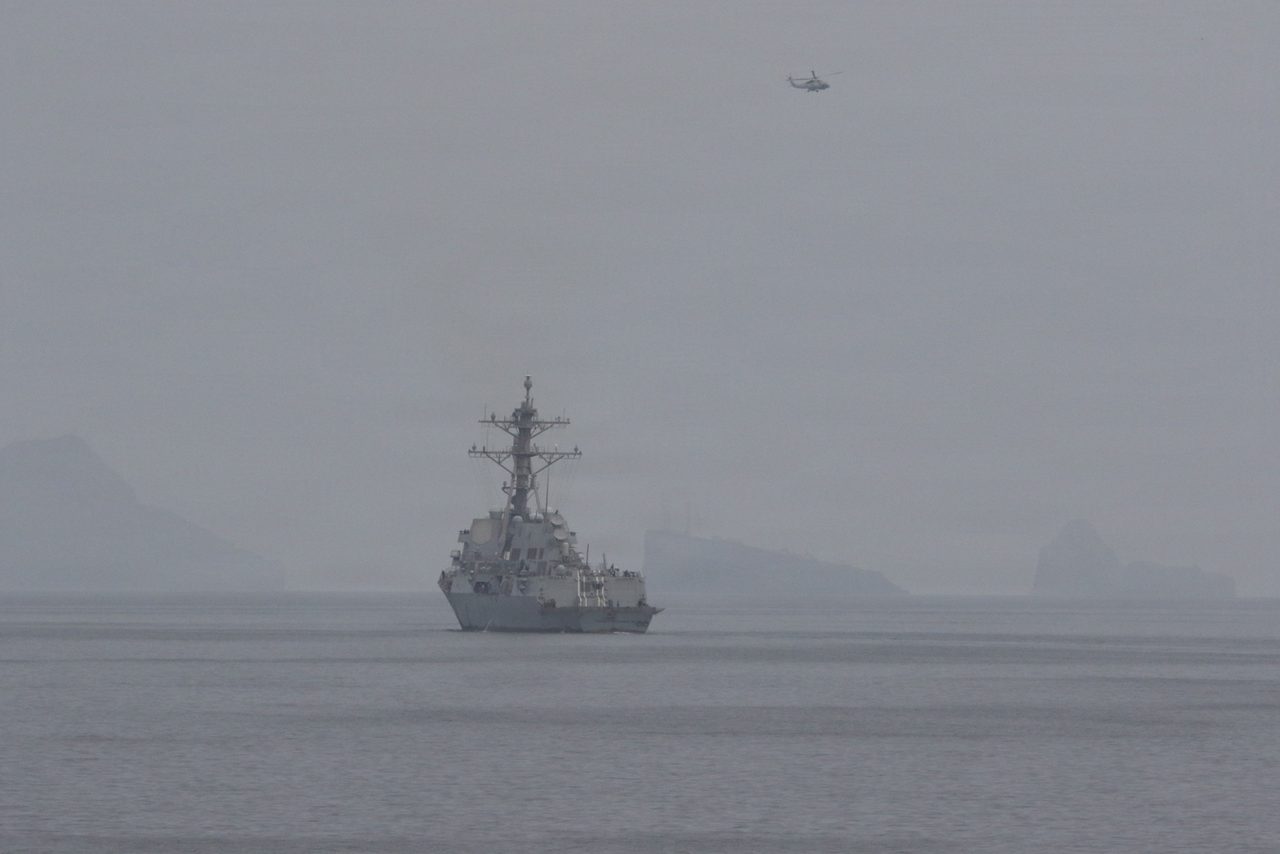
Photo: NAVCENT Public Affairs / Public domain · via Wikimedia Commons
Seven Days to Reopen Hormuz, and 6,000 Crews Still Waiting
The offer has not been withdrawn
Iran's foreign minister, Abbas Araghchi, told Iranian outlets on Sunday that Tehran has not pulled its seven-day plan to reopen the Strait of Hormuz. The proposal was passed to Washington through Qatar, and Araghchi used the same line at a meeting of Islamic Cooperation foreign ministers in Baghdad a day earlier: the plan "is still on the table." Washington has submitted its views, he said, and Tehran is reviewing them.
Reopening is a condition, not a schedule
The bargain is explicit. It calls for a seven-day cessation of hostilities on all fronts, Lebanon included, plus an end to the U.S. naval blockade of Iranian ports, the lifting of sanctions on Iranian oil, and the release of at least $12 billion in frozen assets. The strait would reopen on the sixth day; U.S.-Iran talks would resume on the seventh. Tehran treats reopening as leverage rather than concession — on Sunday the Revolutionary Guard's navy was still insisting the waterway is closed and transit prohibited.
Washington answered only in part
Mohsen Rezaei, secretary of Iran's Supreme National Security Council, said on Oct. 12 that Washington had accepted some of the seven conditions but that its overall response was "inadequate." President Trump's messaging has been inconsistent: at a Kentucky rally on Saturday he said the war would end "very quickly" and that U.S. gasoline would be cheaper than before it began; on Sunday he warned that Washington could "soon finish the job" unless Tehran changed course.
The worst stretch of the war for shipping
Britain's UK Maritime Trade Operations recorded 23 attacks since Oct. 1, nearly double the monthly average since the conflict began, and at least 12 vessels struck in the week to Oct. 16, ten of them inside the strait — the highest weekly total since fighting started on Feb. 28. UKMTO concedes that most attacked ships decline to report, so the true figure is likely higher. The International Maritime Organization counts 100 confirmed incidents as of Oct. 9 and 24 seafarers killed; the Financial Times tallied 24 ships attacked in roughly two weeks.
Six thousand people are still aboard
IMO Secretary-General Arsenio Dominguez told Fox News that around 6,000 seafarers have been trapped in the region since the conflict began, describing a "double blockade" and a situation that remains "severe and critical." His message to shipowners: do not transit until there are guarantees. Seafarers, he added, are not trained for combat and are not party to the war. Iran's Oct. 9 letter to the IMO accused the U.S. military of using VHF Channel 16, the international distress frequency, to intimidate Iranian crews.
Ghost tonnage and false flags
Dominguez linked part of the surge in attacks to fraudulent registrations and false flags, with irresponsible owners moving cargo on unregistered shuttle tankers that are hard to trace when something goes wrong. That helps explain how attack counts and transit counts can rise together: the risk is pushed onto crews and, eventually, onto buyers.
Two accounts of one waterway
General Brad Cooper, the top U.S. commander in the region, says 400 ships and 100 million barrels of oil moved through the strait in the past week. UKMTO logged 125 outbound and 129 inbound transits over the same period — 254 vessels in total. Iran says the strait is shut; Washington says it controls the passage; shipowners are betting hull by hull. The gap between the numbers is itself the story.
Oil is priced for a long closure
Brent touched $110 a barrel on Friday, its first trip to that level since May, and settled at its highest since May 19. On Monday it fell 1.22% to $108.52, with U.S. crude at $101.28. The cost of moving Gulf crude to China on a very large crude carrier has climbed to about $36 a barrel from roughly $7 before the war, according to Commonwealth Bank of Australia. DBS expects prices to hold between $100 and $110 into the midterms.
Two dates that decide the rest
The first is whether Washington accepts the seven-day plan; if it does, day six settles the question, and if it does not, the attack curve probably keeps climbing. The second is Nov. 3. Trump signed an executive order on Friday waiving parts of the Russia energy sanctions, with a 60-day review of the impact — read by analysts as an attempt to cap pump prices rather than to fix the strait. Whether 6,000 crews get off their ships depends on which of the two comes first.
Sources
- CBS News
- Reuters
- Fox News
- NBC News
- Al Jazeera